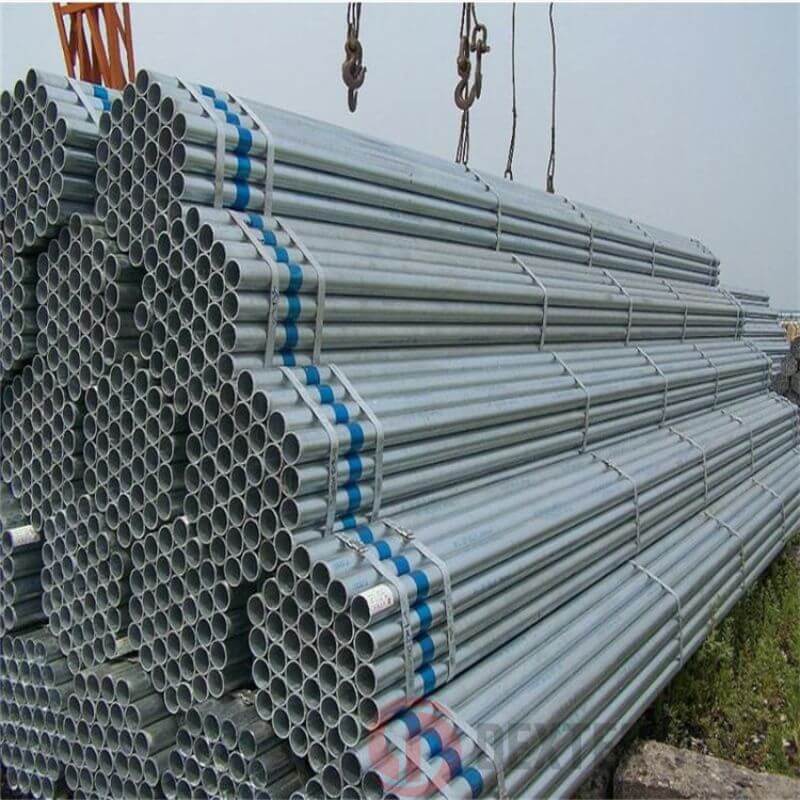
Galvanized steel tubing provides strong corrosion protection through a zinc coating that bonds directly to the steel surface. This coating protects the base metal from environmental exposure.
Another important advantage is durability in outdoor environments. Galvanized tubes can withstand moisture, rain, and temperature changes without requiring frequent maintenance.
The coating also provides sacrificial protection. Even if the zinc layer is scratched, surrounding zinc will continue to protect the exposed steel from corrosion.
Compared with painted or plated finishes, galvanizing offers long-term corrosion protection that is particularly suitable for infrastructure and outdoor installations.
| Comparison Dimension | Galvanized Steel Tube | Chrome Plated Steel Tube | Powder Coated Steel Pipe |
|---|---|---|---|
| Primary Protection Method | Zinc coating provides sacrificial corrosion protection | Decorative chromium plating protects surface | Polymer coating protects surface from environment |
| Typical Applications | Fencing, solar structures, agricultural buildings | Equipment rods, decorative mechanical components | Handrails, fencing, architectural products |
| Surface Appearance | Metallic zinc finish | Bright mirror-like finish | Colored finish available in many RAL options |
Frequently Asked Questions
Buyers of galvanized steel tubing are typically contractors and installers working on outdoor infrastructure projects. Their questions often focus on corrosion protection performance, coating quality, and installation considerations. These topics reflect the practical concerns involved in selecting materials that must remain durable with minimal maintenance.
How does galvanizing protect steel tubing from corrosion?
The zinc coating forms a barrier that prevents moisture and oxygen from reaching the steel surface. In addition, zinc provides sacrificial protection by corroding first if the coating is scratched.
How long can galvanized steel tubes last outdoors?
In many environments, galvanized steel tubing can provide corrosion protection for several decades. Actual service life depends on coating thickness and environmental exposure conditions.
Is the zinc coating applied to both the inside and outside of the tube?
Yes. In hot dip galvanizing, the molten zinc coats both internal and external surfaces of the tube, providing comprehensive corrosion protection.
Can galvanized tubes be welded during installation?
Welding is possible but typically performed before galvanizing whenever possible. Welding after galvanizing can damage the coating in the welded area and may require touch-up protection.
What industries commonly use galvanized steel tubing?
Galvanized tubes are widely used in fencing systems, solar panel mounting structures, agricultural buildings, scaffolding, and outdoor structural frameworks.
The zinc coating forms a barrier that prevents moisture and oxygen from reaching the steel surface. In addition, zinc provides sacrificial protection by corroding first if the coating is scratched.
In many environments, galvanized steel tubing can provide corrosion protection for several decades. Actual service life depends on coating thickness and environmental exposure conditions.
Yes. In hot dip galvanizing, the molten zinc coats both internal and external surfaces of the tube, providing comprehensive corrosion protection.
Welding is possible but typically performed before galvanizing whenever possible. Welding after galvanizing can damage the coating in the welded area and may require touch-up protection.
Galvanized tubes are widely used in fencing systems, solar panel mounting structures, agricultural buildings, scaffolding, and outdoor structural frameworks.
Related Glossaries
A corrosion protection process where steel tubes are immersed in molten zinc. The zinc reacts with the steel surface to form a durable protective coating that helps prevent rust in outdoor and humid environments.
The protective metallic layer formed on the steel surface during the galvanizing process. This coating shields the steel from moisture and oxygen, significantly extending the service life of the tube in exposed conditions.
A chemical treatment applied after galvanizing to stabilize the zinc surface and reduce oxidation during storage and transportation before installation.
A corrosion protection process where steel tubes are immersed in molten zinc. The zinc reacts with the steel surface to form a durable protective coating that helps prevent rust in outdoor and humid environments.
The protective metallic layer formed on the steel surface during the galvanizing process. This coating shields the steel from moisture and oxygen, significantly extending the service life of the tube in exposed conditions.
A chemical treatment applied after galvanizing to stabilize the zinc surface and reduce oxidation during storage and transportation before installation.
Industries Served
Solar Energy Systems
- Solar panel mounting structures
- Ground-mounted solar arrays
- Photovoltaic support frames
Agricultural Infrastructure
- Livestock fencing systems
- Greenhouse structures
Construction & Outdoor Structures
- Handrails, guardrails
- canopy supports
- Exterior building frameworks