
Create Permanent, High-Strength Joints with Our Steel Riveting Expertise
Secure your assemblies with the time-tested reliability of riveted connections.
Fabrication Services
-
Bending
-
Pipe Beveling
-
Bolted Connection
-
Cambering
-
Cutting
-
Drilling
-
Galvanization
-
Punching
-
Riveting
-
Slitting
-
Slotting
-
Tapping
-
Welding
Professional Riveting Service
Dexter Steel’s riveting services provide robust, vibration-resistant joints that will not loosen over time, making them ideal for heavy machinery, structural frameworks, and critical fabrications.
We specialize in the two primary categories of steel riveting. For the ultimate in structural integrity, we offer hot-driven riveting, where steel rivets are heated and pneumatically driven, forming a permanent shop head as they cool and contract, creating a tight clamp.
Precision and Compliance in Every Project
Our riveting processes are governed by rigorous quality control to ensure every joint meets specification. We adhere to historical standards.
Project Portfolio
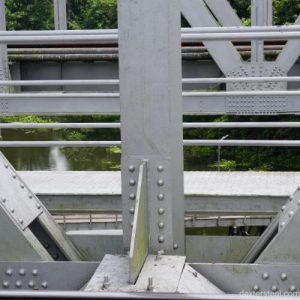
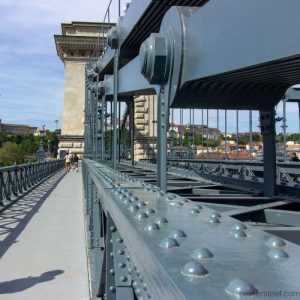
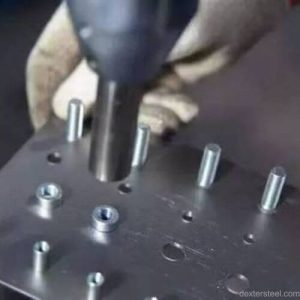
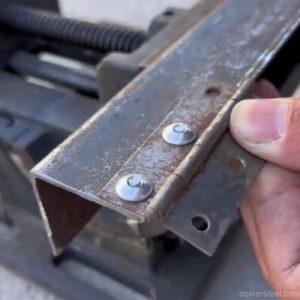
Related Industry Terms
A standard material for creating hot-driven rivets. It has the necessary ductility to be formed when hot and develops strength upon cooling.
A traditional method where a rivet is heated to a glowing red state, inserted into a hole, and then hammered to form a second head. The shrinkage upon cooling clamps the plates together.
A tubular rivet that can be installed from one side of the workpiece using a specialized tool. The mandrel is pulled, deforming the rivet and breaking off.
A high-strength, two-piece blind fastener that functions like a rivet. It provides very high clamp-up and shear strength, often used in heavy equipment and steel frame building.
A standard material for creating hot-driven rivets. It has the necessary ductility to be formed when hot and develops strength upon cooling.
A traditional method where a rivet is heated to a glowing red state, inserted into a hole, and then hammered to form a second head. The shrinkage upon cooling clamps the plates together.
A tubular rivet that can be installed from one side of the workpiece using a specialized tool. The mandrel is pulled, deforming the rivet and breaking off.
A high-strength, two-piece blind fastener that functions like a rivet. It provides very high clamp-up and shear strength, often used in heavy equipment and steel frame building.
Frequently Asked Questions
What are the advantages of riveting over welding or bolting?
Riveting creates vibration-resistant joints that won’t loosen, does not weaken the base metal with heat (like welding), and provides a consistent, inspectable connection.
When should I choose blind rivets over solid rivets?
Use blind rivets when you only have access to one side of the workpiece. For maximum strength and structural integrity where both sides are accessible, solid or hot-driven rivets are superior.
Can you rivet hardened or high-carbon steel?
Riveting is generally not recommended for hardened steels as they are too brittle and may crack during the forming process. Softer, low-carbon steels are ideal.
How do you ensure the quality of a riveted joint?
We ensure quality through visual inspection of the shop head formation, proof-load testing of sample joints, and adherence to specified installation torque/tension for lockbolts.
Riveting creates vibration-resistant joints that won’t loosen, does not weaken the base metal with heat (like welding), and provides a consistent, inspectable connection.
Use blind rivets when you only have access to one side of the workpiece. For maximum strength and structural integrity where both sides are accessible, solid or hot-driven rivets are superior.
Riveting is generally not recommended for hardened steels as they are too brittle and may crack during the forming process. Softer, low-carbon steels are ideal.
We ensure quality through visual inspection of the shop head formation, proof-load testing of sample joints, and adherence to specified installation torque/tension for lockbolts.