
Precision Pipe Beveling for Superior Weld Quality and Project Efficiency
Partner with Dexter Steel for your critical pipe beveling needs. We go beyond supplying high-quality steel materials by offering expert, precision beveling services
Fabrication Services
-
Bending
-
Pipe Beveling
-
Bolted Connection
-
Cambering
-
Cutting
-
Drilling
-
Galvanization
-
Punching
-
Riveting
-
Slitting
-
Slotting
-
Tapping
-
Welding
Engineered for Global Standards
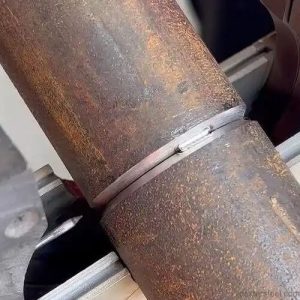
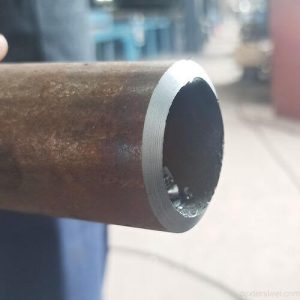
Our pipe beveling procedures are developed to meet the rigorous demands of international standards, including ASME B31.1 (Power Piping) and B31.3 (Process Piping), API 5L for line pipe, and ISO 5817 for weld quality. We service clients across the USA, Australia, and Europe, providing bevels with precise angles (e.g., 37.5° standard bevel) and root faces that are meticulously measured to ensure flawlessly fused joints in critical applications
Advanced Beveling Technology
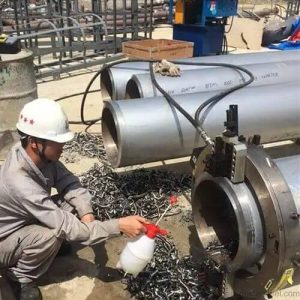
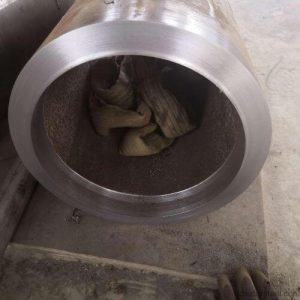
Whether you require a simple Compound Bevel (CB) for carbon steel or a complex J-bevel for high-alloy materials to prevent cracking, our technicians are equipped to execute it. We handle a wide range of pipe diameters, from 2-inch SCH 40 pipes for mechanical systems to 48-inch large-diameter pipes for major transmission projects, with tolerances held within ±0.5°.
Beveling Project Portfolio
Related Industry Terms
The angle formed between the prepared edge of the pipe and a line perpendicular to the pipe surface. Critical for ensuring proper weld penetration and joint strength.
The narrow, flat surface at the very end of the bevel. Its precise dimension is vital to prevent burn-through during the root pass while allowing full penetration.
The area of base material that is not melted but has its microstructure altered by the heat of welding or beveling. Controlled beveling minimizes the HAZ’s negative impact.
The angle formed between the prepared edge of the pipe and a line perpendicular to the pipe surface. Critical for ensuring proper weld penetration and joint strength.
The narrow, flat surface at the very end of the bevel. Its precise dimension is vital to prevent burn-through during the root pass while allowing full penetration.
The area of base material that is not melted but has its microstructure altered by the heat of welding or beveling. Controlled beveling minimizes the HAZ’s negative impact.
Frequently Asked Questions
What is the standard bevel angle you provide?
Our standard bevel is 37.5°, which is ideal for most wall thicknesses and creates a strong V-groove for welding. We can customize this angle to meet specific project WPS (Welding Procedure Specification) requirements.
What tolerances can you hold on the bevel geometry?
We consistently maintain tight tolerances, typically within ±0.5° on the bevel angle and ±0.5mm on the root face dimension, ensuring perfect fit-up and reducing welding time.
Do you handle beveling for high-alloy and stainless-steel pipes?
Absolutely. We have specialized procedures and tooling for stainless and high-alloy steels to control heat input, prevent contamination, and preserve the material’s inherent properties.
Can you bevel pipes that have already been coated or lined?
We recommend beveling before any internal coating or lining is applied. However, we can work with pre-coated pipes using specific techniques to protect the coating, which we can discuss on a case-by-case basis.
Our standard bevel is 37.5°, which is ideal for most wall thicknesses and creates a strong V-groove for welding. We can customize this angle to meet specific project WPS (Welding Procedure Specification) requirements.
We consistently maintain tight tolerances, typically within ±0.5° on the bevel angle and ±0.5mm on the root face dimension, ensuring perfect fit-up and reducing welding time.
Absolutely. We have specialized procedures and tooling for stainless and high-alloy steels to control heat input, prevent contamination, and preserve the material’s inherent properties.
We recommend beveling before any internal coating or lining is applied. However, we can work with pre-coated pipes using specific techniques to protect the coating, which we can discuss on a case-by-case basis.