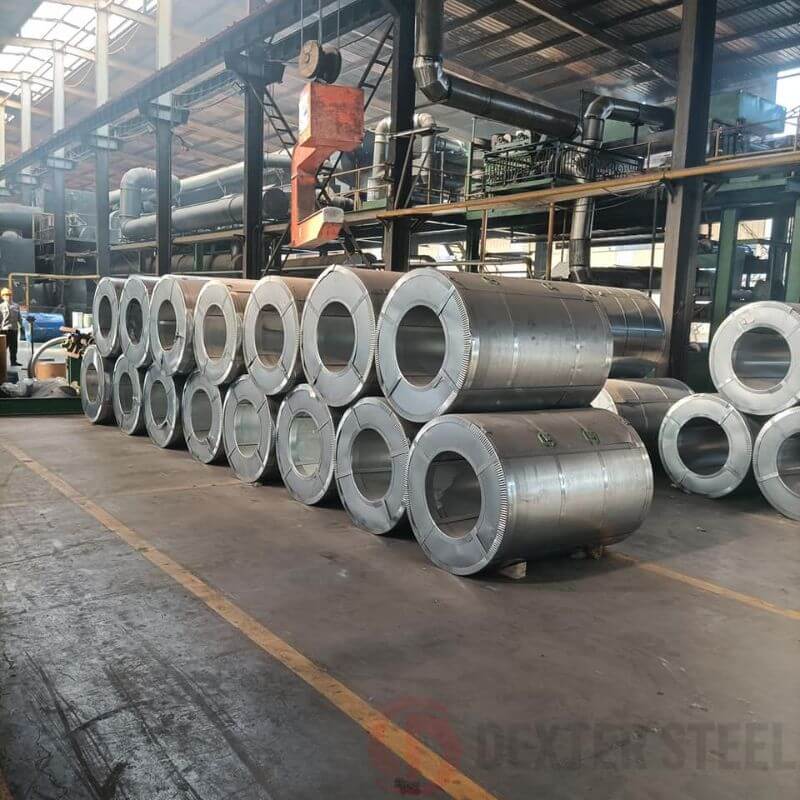
Coil Supply Condition
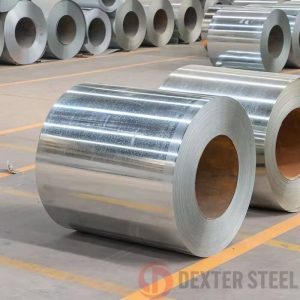
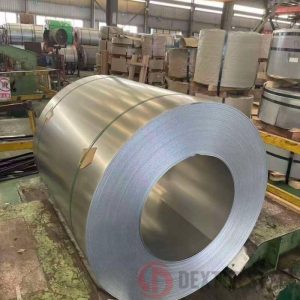
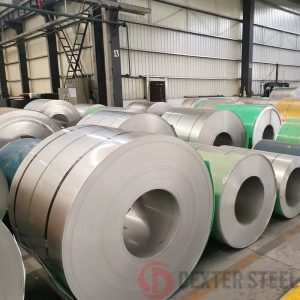
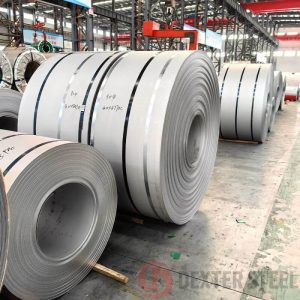
Stainless steel coil is most commonly supplied in annealed condition. After cold rolling, the material is annealed to restore ductility and ensure stable forming performance.
The standard industrial surface finish for cold rolled material is 2B finish, which provides a smooth, uniform, and production-ready surface suitable for further fabrication, polishing, or coating.
Bright Annealed (BA) finish is available when higher surface reflectivity is required for visible or decorative applications. Protective PVC film can be applied upon request to prevent surface scratches during transport and processing.
Thickness Range
| Product Form | Typical Thickness Range | Common Application Focus |
|---|---|---|
| Cold Rolled Stainless Steel Coil | 0.3 mm – 6.0 mm | Precision fabrication, deep drawing, appliance panels, food equipment, architectural components |
| Hot Rolled Stainless Steel Coil | 3.0 mm – 12.0 mm+ | Structural parts, heavy fabrication, pressure-related components where surface refinement is secondary |
Material Grades
EN 1.4404
European equivalent to 316L, widely used in EU-regulated projects requiring compliance with EN standards.
JIS SUS304
Japanese standard equivalent of 304, commonly specified in Asian export markets.
304 (UNS S30400)
The most commonly used austenitic stainless steel grade. Suitable for general corrosion resistance, food equipment, and structural components in non-marine environments.
316 (UNS S31600)
Contains molybdenum for enhanced resistance to chlorides and chemical exposure. Common in marine, chemical, and medical applications.
430 (UNS S43000)
Ferritic stainless steel with moderate corrosion resistance and lower cost. Often used in appliance panels and decorative trims.
201 (UNS S20100)
Cost-effective austenitic grade with reduced nickel content. Suitable for indoor applications where corrosion exposure is limited.
Key Characteristics & Comparison
Stainless Steel Coil achieves corrosion resistance through alloying elements such as chromium and nickel. The passive oxide layer formed on the surface provides inherent protection without requiring external coating systems.
Mechanical properties are stable across temperature variations, making stainless steel suitable for food processing, medical, and industrial environments where hygiene and durability are critical.
Surface finish quality plays a major role in application performance. Controlled rolling and annealing processes determine flatness, thickness tolerance, and final appearance.
Compared with Weathering Steel Coil, stainless steel offers superior corrosion resistance in continuously humid, marine, or chemically aggressive environments. Weathering steel relies on a stable rust layer for atmospheric protection, while stainless steel maintains corrosion resistance internally through alloy composition.
From a material-level perspective, stainless steel is selected when long-term corrosion resistance and hygiene are critical. Weathering steel is more suitable for structural outdoor applications where controlled rust appearance is acceptable and cost efficiency is prioritized.
Frequently Asked Questions
The following questions reflect the most common technical concerns raised by international stainless steel coil buyers. They typically relate to corrosion resistance selection, surface finish control, forming performance, and documentation compliance for export-oriented manufacturing.
What is the practical difference between 304 and 316 stainless steel coil?
304 is suitable for most indoor or mild outdoor environments and offers good general corrosion resistance. 316 contains molybdenum, providing improved resistance to chlorides and marine atmospheres, making it more suitable for coastal or chemical exposure conditions.
How does surface finish affect fabrication performance?
2B finish is commonly used for general fabrication and forming. BA provides a brighter surface for visible components. No.4 is preferred for decorative or architectural applications. Surface consistency directly affects polishing, coating, and aesthetic uniformity.
Can stainless steel coil be used for deep drawing applications?
Yes, but grade selection and temper condition are critical. Austenitic grades such as 304 with controlled elongation are typically selected for deep drawing. Proper lubrication and surface condition control are also necessary to avoid cracking.
Is mill test certification and traceability available for export orders?
Yes. Each batch is supplied with mill test certificates covering chemical composition and mechanical properties. Heat number traceability is maintained to meet international quality audit requirements.
304 vs 201 Stainless Steel for Kitchenware
304 stainless steel offers superior corrosion resistance due to its higher nickel content, making it ideal for kitchen environments with frequent exposure to water, food acids, and cleaning agents. It is widely used in sinks, cookware, and food-contact components where hygiene and long-term performance are essential.
201 stainless steel, with lower nickel content, provides a more cost-effective alternative. While it delivers adequate strength and formability, its corrosion resistance is lower, especially in humid or acidic conditions. It is typically used for economical kitchenware, decorative parts, or products with limited exposure to harsh environments.
In practice:
- Use 304 for premium kitchenware and export markets with higher quality standards
- Use 201 where cost sensitivity is the priority and exposure conditions are controlled
304 is suitable for most indoor or mild outdoor environments and offers good general corrosion resistance. 316 contains molybdenum, providing improved resistance to chlorides and marine atmospheres, making it more suitable for coastal or chemical exposure conditions.
2B finish is commonly used for general fabrication and forming. BA provides a brighter surface for visible components. No.4 is preferred for decorative or architectural applications. Surface consistency directly affects polishing, coating, and aesthetic uniformity.
Yes, but grade selection and temper condition are critical. Austenitic grades such as 304 with controlled elongation are typically selected for deep drawing. Proper lubrication and surface condition control are also necessary to avoid cracking.
Yes. Each batch is supplied with mill test certificates covering chemical composition and mechanical properties. Heat number traceability is maintained to meet international quality audit requirements.
304 stainless steel offers superior corrosion resistance due to its higher nickel content, making it ideal for kitchen environments with frequent exposure to water, food acids, and cleaning agents. It is widely used in sinks, cookware, and food-contact components where hygiene and long-term performance are essential.
201 stainless steel, with lower nickel content, provides a more cost-effective alternative. While it delivers adequate strength and formability, its corrosion resistance is lower, especially in humid or acidic conditions. It is typically used for economical kitchenware, decorative parts, or products with limited exposure to harsh environments.
In practice:
- Use 304 for premium kitchenware and export markets with higher quality standards
- Use 201 where cost sensitivity is the priority and exposure conditions are controlled