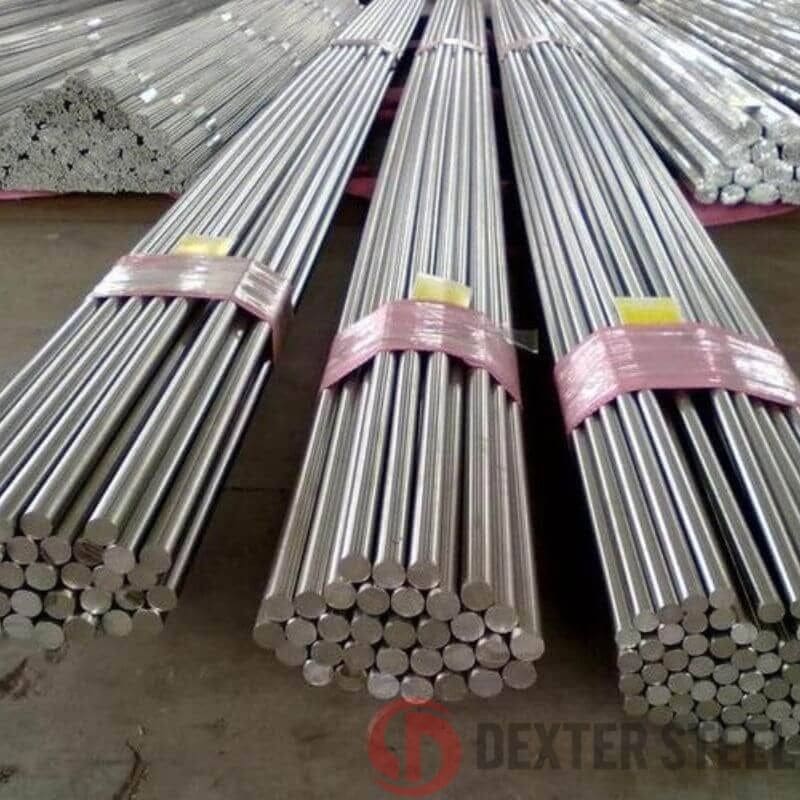
At Dexter Steel, we supply stainless steel bar for component production, with processing available to suit the buyer’s drawings. The right starting stock can reduce both material waste and workshop time.
For a turned shaft, bar size and straightness affect machining. For a fitting with wrench flats, hexagonal stock can save milling work. For exposed hardware, surface quality matters because marks may remain visible after fabrication.
These details help us match the supply to the finished part, rather than quote on grade and weight alone.
Choose the Grade Where Its Benefits Count
304 is a practical starting point for general equipment and hardware. Where parts face chloride exposure, 316 or 316L may justify the extra cost. For components that will be welded, 316L’s low carbon content is a useful distinction.
Other grades answer more specific needs:
- 321: for suitable heat-exposed components where its resistance to heat-related corrosion matters.
- 2205 duplex: for parts that need higher strength alongside chloride corrosion resistance.
- 17-4 PH: for high-strength shafts, pins and valve components, with the heat-treatment condition specified.
A grade upgrade earns its place when it solves a service problem. It can also add processing cost. For example, 2205 is harder to machine than 304 or 316, which can increase tooling and production costs.
Supply That Fits Your Workshop
Full-length bars suit buyers who cut different parts from the same stock. Cut blanks can be more useful for repeat orders with a fixed component length.
Dexter Steel can also provide specified drilling, tapping and other processing. This can help buyers whose workshops have limited capacity or who want fewer operations before assembly.
A drawing, required quantity and delivery condition give us a clearer basis for quoting. They help define the machining allowance, surface requirements and work to complete before shipment.