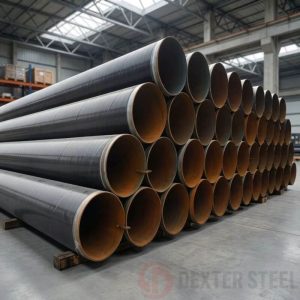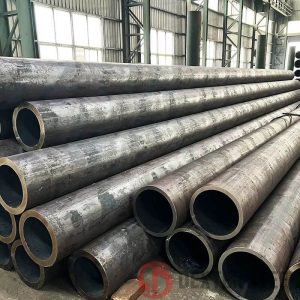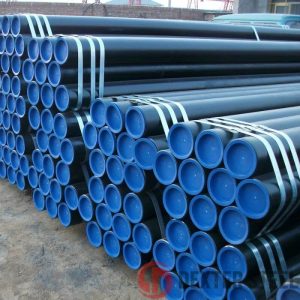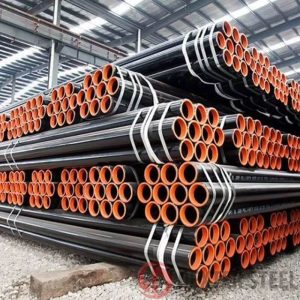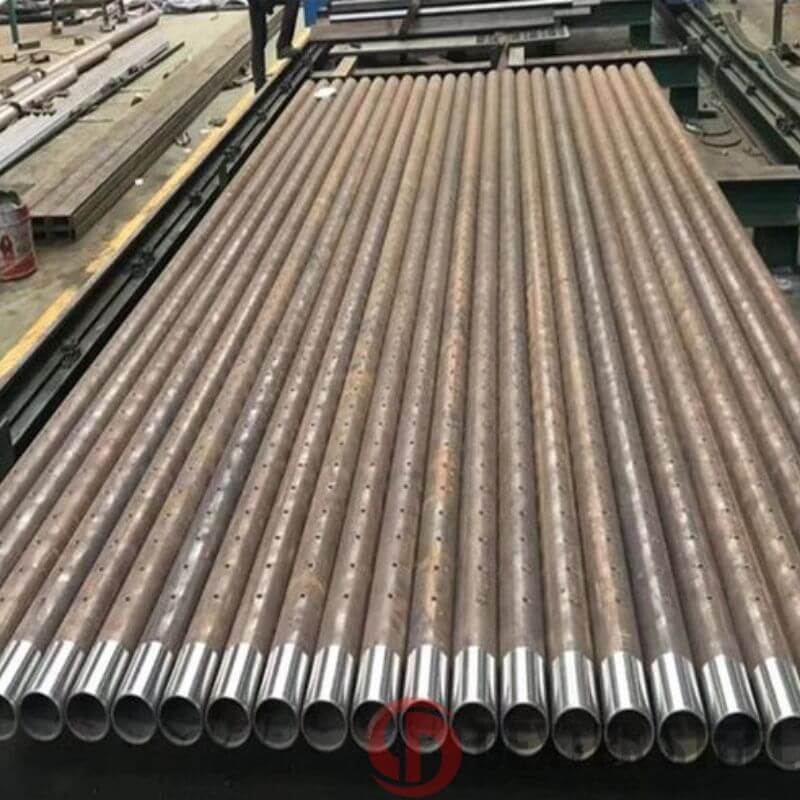
Steel pipe piling provides high structural strength and deep load-bearing capacity, making it suitable for foundations in difficult soil conditions.
Another advantage is installation flexibility. Pipe piles can be driven, drilled, or installed using various methods depending on the site requirements.
The hollow interior of the pipe allows piles to be filled with concrete when additional structural strength is required.
Pipe piles can also be extended through welding during installation, allowing contractors to achieve the necessary foundation depth for large infrastructure projects.
| Comparison Dimension | Steel Pipe Piling | Penstock Steel Pipe | AWWA Steel Pipe | EMT Conduit Pipe |
|---|---|---|---|---|
| Primary Function | Deep foundation structural support | High-pressure water transport for hydropower | Municipal water transmission systems | Electrical wiring protection |
| Structural Role | Load-bearing foundation element | Pressure pipeline component | Water distribution pipeline | Conduit for electrical cables |
| Industry Application | Bridges, ports, buildings | Hydropower plants | Municipal water systems | Commercial electrical construction |
Frequently Asked Questions
Steel pipe piling purchasers are generally involved in large‑scale infrastructure and marine construction projects where foundation stability is critical. Their inquiries mainly concentrate on load‑bearing capacity, installation techniques, and pipe specifications that directly influence drivability and structural integrity.
What is the main purpose of steel pipe piling in construction?
Steel pipe piles are used to transfer structural loads from buildings or infrastructure into deeper, more stable soil layers. This allows structures to be built safely in areas with weak surface soils.
How are steel pipe piles installed?
Pipe piles are usually driven into the ground using pile driving equipment or installed using drilling methods depending on soil conditions and project requirements.
What factors determine the size of a pipe pile?
Pile diameter, wall thickness, and material grade are determined by structural load requirements, soil conditions, and foundation design calculations.
Can pipe piles be extended during installation?
Yes. Additional pipe sections can be welded to the pile as it is driven deeper into the ground. This allows contractors to reach the required foundation depth.
Are steel pipe piles suitable for marine environments?
Yes. Steel pipe piles are widely used in marine structures such as docks, piers, and offshore platforms. Protective coatings or corrosion-resistant materials may be applied depending on environmental exposure.
Steel pipe piles are used to transfer structural loads from buildings or infrastructure into deeper, more stable soil layers. This allows structures to be built safely in areas with weak surface soils.
Pipe piles are usually driven into the ground using pile driving equipment or installed using drilling methods depending on soil conditions and project requirements.
Pile diameter, wall thickness, and material grade are determined by structural load requirements, soil conditions, and foundation design calculations.
Yes. Additional pipe sections can be welded to the pile as it is driven deeper into the ground. This allows contractors to reach the required foundation depth.
Yes. Steel pipe piles are widely used in marine structures such as docks, piers, and offshore platforms. Protective coatings or corrosion-resistant materials may be applied depending on environmental exposure.
Related Glossaries
A steel pipe used as a deep foundation element driven into the ground to support structures. Pipe piles transfer loads from buildings or bridges to deeper and more stable soil layers.
The process of installing foundation piles by driving them into the ground using impact hammers or vibration equipment until the required depth or load capacity is achieved.
Pipe piles used in marine or waterfront construction projects such as docks, piers, and offshore structures where foundations must withstand water exposure and dynamic loads.
A steel pipe used as a deep foundation element driven into the ground to support structures. Pipe piles transfer loads from buildings or bridges to deeper and more stable soil layers.
The process of installing foundation piles by driving them into the ground using impact hammers or vibration equipment until the required depth or load capacity is achieved.
Pipe piles used in marine or waterfront construction projects such as docks, piers, and offshore structures where foundations must withstand water exposure and dynamic loads.