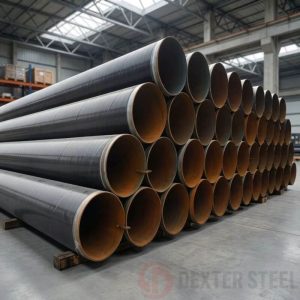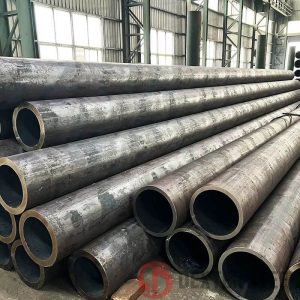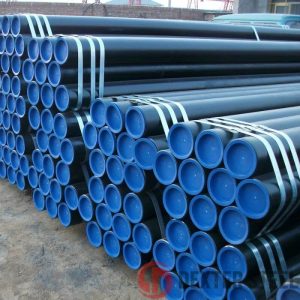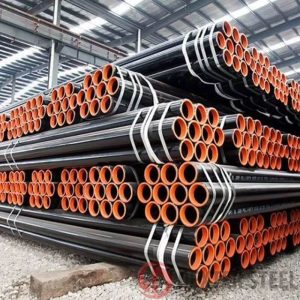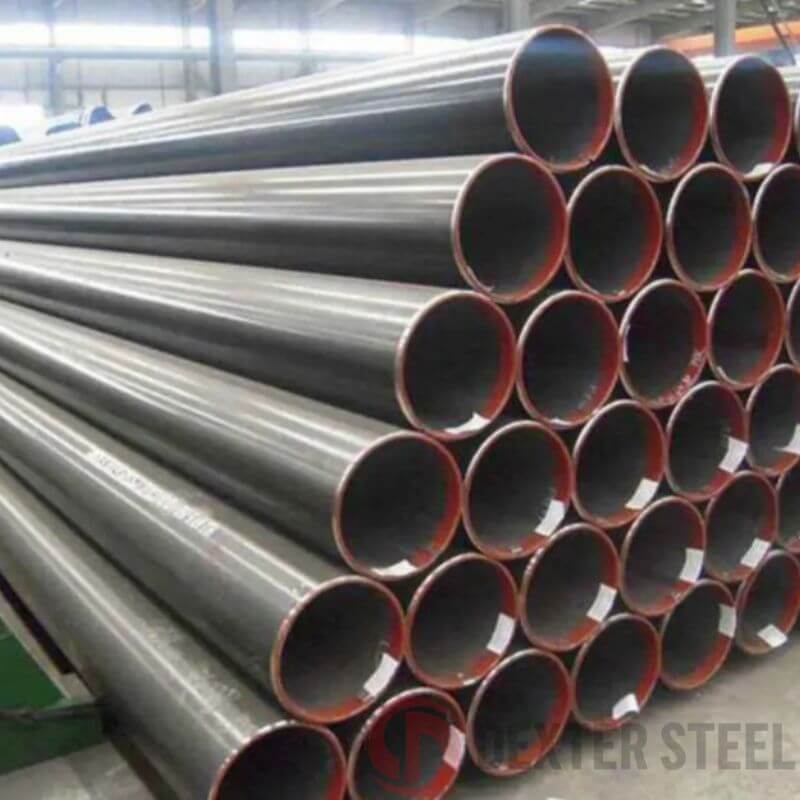
LSAW steel pipe is produced from steel plate using longitudinal submerged arc welding. The straight seam allows precise control of welding parameters and weld quality.
Another key characteristic is the ability to produce large-diameter pipes with thick walls, making LSAW suitable for high-pressure pipeline systems.
The manufacturing process also allows accurate control of pipe geometry and roundness, which is important for pipeline installation and welding in the field.
Because the pipe is formed from plate, mechanical properties can be carefully controlled through plate selection and welding procedures.
| Comparison Dimension | LSAW Steel Pipe (Longitudinal SAW) | SSAW Steel Pipe (Spiral SAW) |
|---|---|---|
| Weld Orientation | Straight longitudinal weld seam | Spiral weld seam along pipe body |
| Manufacturing Method | Formed from steel plate and welded along length | Produced from steel coil with spiral forming |
| Typical Applications | Oil and gas pipelines, offshore transmission lines | Water pipelines, piling, drainage systems |
Value Added Sevices
For cross-country pipelines and water transmission mains, the integrity of the weld seam and the joint is paramount. Dexter Steel prepares large-diameter pipe ends to ensure they meet strict API standards and are ready for rapid, reliable field welding
Frequently Asked Questions
Pipeline engineers and energy companies often evaluate LSAW steel pipe based on weld integrity, dimensional accuracy, and compliance with international pipeline standards. Their questions typically focus on manufacturing processes, inspection requirements, and suitability for large-diameter transmission systems. These concerns reflect the critical safety and reliability demands associated with energy pipeline infrastructure.
What is the main advantage of LSAW steel pipe in pipeline construction?
The longitudinal welding method provides excellent weld quality and structural strength. This makes LSAW pipe well suited for high-pressure oil and gas transmission pipelines.
What industries commonly use LSAW steel pipe?
LSAW pipe is widely used in oil and gas transmission, offshore pipelines, water transmission systems, and large infrastructure projects requiring high-strength large-diameter pipes.
What manufacturing methods are used to produce LSAW pipe?
Common forming methods include UOE and JCOE processes, where steel plates are formed into cylindrical shapes before being welded using submerged arc welding.
How is weld quality verified in LSAW pipe production?
Manufacturers typically conduct non-destructive testing such as ultrasonic testing, radiographic inspection, and hydrostatic testing to ensure weld integrity.
Can LSAW pipes be produced in large diameters?
Yes. LSAW pipes are commonly produced in large diameters suitable for major pipeline systems and infrastructure projects.
The longitudinal welding method provides excellent weld quality and structural strength. This makes LSAW pipe well suited for high-pressure oil and gas transmission pipelines.
LSAW pipe is widely used in oil and gas transmission, offshore pipelines, water transmission systems, and large infrastructure projects requiring high-strength large-diameter pipes.
Common forming methods include UOE and JCOE processes, where steel plates are formed into cylindrical shapes before being welded using submerged arc welding.
Manufacturers typically conduct non-destructive testing such as ultrasonic testing, radiographic inspection, and hydrostatic testing to ensure weld integrity.
Yes. LSAW pipes are commonly produced in large diameters suitable for major pipeline systems and infrastructure projects.
Related Glossaries
A welding process where the weld arc operates beneath a layer of protective flux. This method produces deep, high-quality welds commonly used in large-diameter pipe manufacturing.
A straight weld running along the length of the pipe. It is created when a steel plate is rolled into a cylindrical shape and welded.
A welding process where the weld arc operates beneath a layer of protective flux. This method produces deep, high-quality welds commonly used in large-diameter pipe manufacturing.
A straight weld running along the length of the pipe. It is created when a steel plate is rolled into a cylindrical shape and welded.
Industries Served
Offshore & Marine Infrastructure
- Offshore structural piles
- Subsea pipeline systems
- Seawater intake pipelines
Hydropower & Energy Projects
- High-pressure water conveyance pipelines
- Cooling water pipelines in power plants.
Infrastructure Pipelines
- Natural gas transmission pipelines
- Cross-country water pipelines
- Industrial fluid transport pipelines