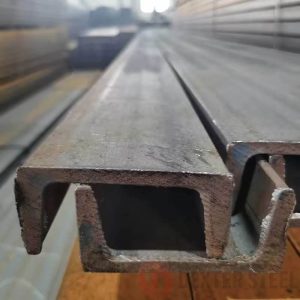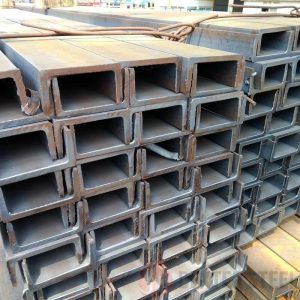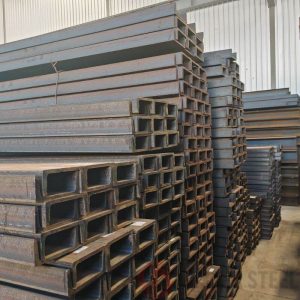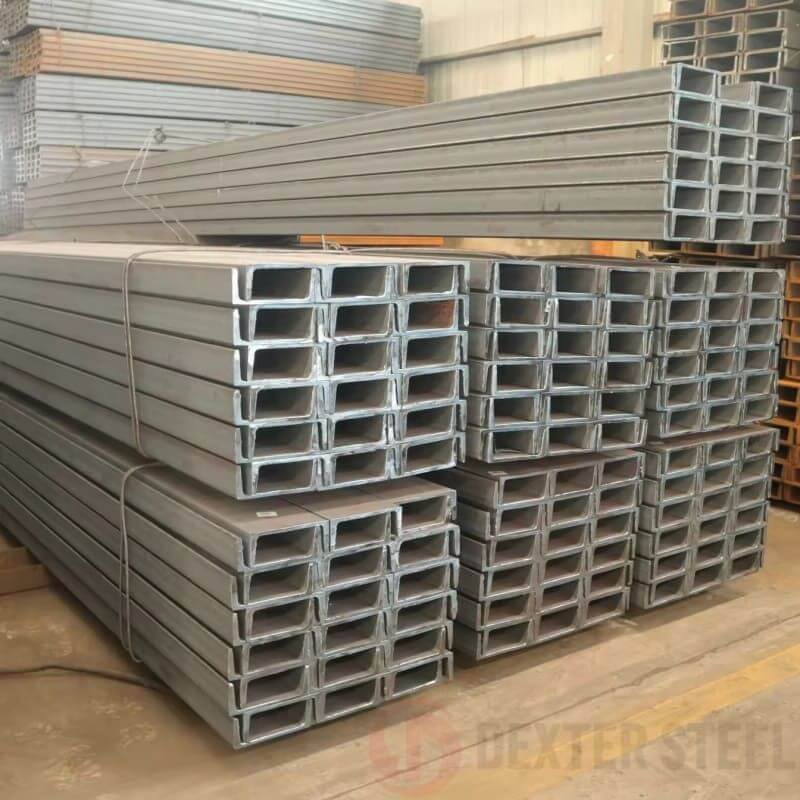
Carbon steel channels are valued for their strength, weldability, and cost efficiency. Their structural profile allows them to carry vertical and horizontal loads effectively while remaining relatively lightweight compared with solid structural members.
The U-shaped geometry provides good resistance to bending and makes channels easy to integrate into structural frameworks. This shape also simplifies bolted or welded connections with plates, beams, and other structural members.
Carbon steel channels are commonly manufactured through hot rolling, which ensures uniform grain structure and reliable mechanical performance for structural applications.
Because of their versatility, carbon steel channels are widely used in building structures, equipment frames, and industrial support systems where dependable load-bearing performance is required.
| Comparison Dimension | Carbon Steel Channel | C / U Channel Steel | UPN Channel Steel | PFC Steel Channel |
|---|---|---|---|---|
| Typical application | Heavy structural construction and industrial frameworks | Light to medium structural support such as purlins and frames | European standard heavy structural applications | Structural framing in UK, Australia, and New Zealand |
| Flange geometry | Usually parallel or slightly tapered depending on standard | Typically lighter profiles with simpler geometry | Tapered flange profile defined by EN standards | Parallel flange profile for easier connections |
| Typical buyers | Structural fabricators and contractors | Builders and light fabrication workshops | European infrastructure engineers and contractors | Structural engineers in UK/Australia markets |
Value Added Sevices
Fabricators and contractors use carbon steel channels for structural framing. To integrate these channels into buildings and plants, they require precise shaping and hole-making to enable efficient bolted or welded connections during steel erection.
Frequently Asked Questions
When sourcing carbon steel channels, structural steel purchasers often raise common technical inquiries, as these components serve as critical load-bearing elements in construction. Fabricators need to confirm that the material satisfies structural design criteria, delivers consistent dimensional precision, and works effectively with welding and other fabrication procedures.
What are carbon steel channels commonly used for
Carbon steel channels are widely used in structural frameworks such as building columns, roof trusses, machinery frames, and industrial support structures. Their U-shaped geometry provides strength and stability while allowing efficient connections with other structural elements.
How are carbon steel channels manufactured
Most carbon steel channels are produced through hot rolling processes, where heated steel billets are shaped into the channel profile. This method provides consistent mechanical properties and stable dimensions suitable for structural applications.
Can carbon steel channels be easily welded during fabrication
Yes. Carbon steel channels typically have good weldability due to their balanced chemical composition. This allows fabricators to integrate them easily into welded frames, structural supports, and construction assemblies.
What standards are commonly used for carbon steel channels
Carbon steel channels are produced according to international structural standards such as ASTM, EN, and JIS specifications. These standards ensure the material meets required mechanical properties and dimensional tolerances for construction projects.
How do buyers choose the correct channel size
Engineers select channel sizes based on structural load requirements, span lengths, and connection design. Fabricators typically refer to structural design drawings and engineering calculations when specifying channel dimensions.
Carbon steel channels are widely used in structural frameworks such as building columns, roof trusses, machinery frames, and industrial support structures. Their U-shaped geometry provides strength and stability while allowing efficient connections with other structural elements.
Most carbon steel channels are produced through hot rolling processes, where heated steel billets are shaped into the channel profile. This method provides consistent mechanical properties and stable dimensions suitable for structural applications.
Yes. Carbon steel channels typically have good weldability due to their balanced chemical composition. This allows fabricators to integrate them easily into welded frames, structural supports, and construction assemblies.
Carbon steel channels are produced according to international structural standards such as ASTM, EN, and JIS specifications. These standards ensure the material meets required mechanical properties and dimensional tolerances for construction projects.
Engineers select channel sizes based on structural load requirements, span lengths, and connection design. Fabricators typically refer to structural design drawings and engineering calculations when specifying channel dimensions.
Material Grades
ASTM A36
Structural carbon steel with 36,000 psi yield, great weldability and machinability, ideal for general building frames, columns, and trusses.
S275JR
EN 10025‑2 European steel with 275 MPa yield, good weldability, widely used in bolted and welded commercial and industrial buildings.
SS400
JIS G3101 Japanese steel, 400–510 MPa tensile strength, widely used in Asia for beams, channels, and angles in construction.
Q235B
GB/T 700 Chinese carbon steel, common in buildings, bridges, and ships, with good plasticity and welding performance.
Industries Served
Construction & Structural
- Structural columns and beams
- Roof trusses Machine bases
Transportation & Infrastructure
- Highway sign structures
- Railcar frames and trailer chassis
Mining & Energy
- Conveyor system frames
- Shaft guides and supports