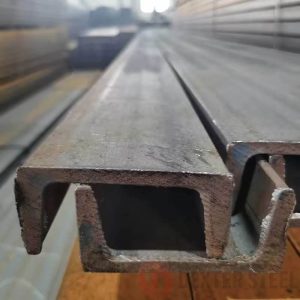
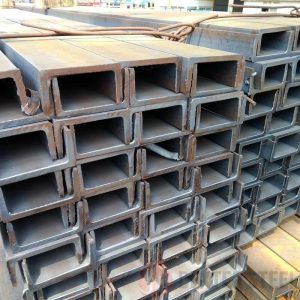
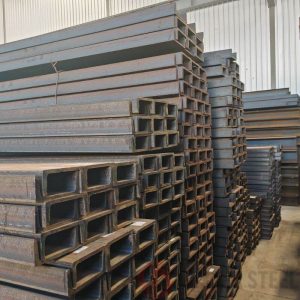
Stainless steel channels provide excellent corrosion resistance, making them suitable for environments exposed to moisture, chemicals, or sanitation requirements.
Their alloy composition allows them to maintain structural integrity while resisting rust and oxidation over long service periods.
These channels also provide good surface cleanliness and are often used in applications where hygiene and easy cleaning are important.
Although stainless steel channels have a higher material cost, their long-term durability and reduced maintenance requirements often justify the investment in demanding industrial environments.
| Comparison Dimension | Stainless Steel Channel | Weathering Steel Channel (Corten) | Galvanized Steel Channel |
|---|---|---|---|
| Corrosion protection method | Internal alloy composition resists corrosion | Protective rust-like patina forms naturally | Zinc coating protects underlying steel |
| Typical environments | Food processing, chemical plants, sanitary facilities | Outdoor architecture and bridges | Outdoor structures and agricultural installations |
| Typical buyer priority | Hygiene and corrosion resistance | Aesthetic weathered appearance | Long-term outdoor corrosion protection |
Value Added Sevices
Buyers in hygienic industries require channels for equipment framing. Processing must be precise to maintain corrosion resistance and ensure clean, contamination-free surfaces for sensitive environments.
Frequently Asked Questions
Buyers sourcing stainless steel channels often ask technical questions related to corrosion resistance, grade selection, and surface cleanliness. These concerns are especially important for industries such as food processing or chemical manufacturing where materials must meet strict hygiene and durability standards.
Why are stainless steel channels used in hygienic environments
Stainless steel forms a protective chromium oxide layer that prevents rust and allows the material to resist corrosion and contamination. This makes it suitable for food processing equipment and pharmaceutical facilities.
What stainless steel grades are commonly used for channels
Grades such as 304 and 316 are the most widely used. Grade 304 offers general corrosion resistance, while 316 provides improved resistance to chlorides and chemical exposure.
How do stainless steel channels compare with carbon steel channels
Stainless steel channels offer superior corrosion resistance and require less maintenance, but they are generally more expensive than carbon steel channels used in standard structural applications.
Can stainless steel channels be welded during fabrication
Yes. Most stainless steel grades used for channels provide good weldability when proper welding procedures and filler materials are used.
Stainless steel forms a protective chromium oxide layer that prevents rust and allows the material to resist corrosion and contamination. This makes it suitable for food processing equipment and pharmaceutical facilities.
Grades such as 304 and 316 are the most widely used. Grade 304 offers general corrosion resistance, while 316 provides improved resistance to chlorides and chemical exposure.
Stainless steel channels offer superior corrosion resistance and require less maintenance, but they are generally more expensive than carbon steel channels used in standard structural applications.
Yes. Most stainless steel grades used for channels provide good weldability when proper welding procedures and filler materials are used.
Material Grades
304/L
Versatile stainless steel with good corrosion resistance; 304L suits food and pharmaceutical equipment.
316/L
Molybdenum‑enhanced corrosion resistance; ideal for chemical, marine and pharmaceutical use.
310S
High‑temperature stainless steel with strong oxidation resistance for furnaces and ovens.
2205 Duplex
High‑strength dual‑phase steel for chemical, marine and pressure vessels.
Industries Served
Primary Industries: Food & Beverage, Pharmaceutical, Marine Architecture
Food Processing
- Sanitary equipment frames
- Wall supports
- Pipe support systems
Architectural & Marine
- Handrails, guardrails
- Structural supports
Chemical & Water Treatment
- Supports for chemical tanks
- Structural framing