Value Added Sevices
Architectural engineers and facade contractors use box section columns for their clean, modern look in exposed applications. They often require precise fabrication to integrate these columns seamlessly into the building’s design and to accommodate services like wiring or plumbing.
Frequently Asked Questions
Buyers of box section steel columns are typically structural engineers, architects, and fabrication contractors working on projects where both structural performance and appearance are important. Their questions often focus on structural capacity, fabrication options, and dimensional accuracy required for architectural and structural integration.
What advantages do box section columns offer compared with open structural sections?
Box sections provide excellent torsional rigidity due to their closed cross-section. This structural efficiency allows them to resist twisting forces better than many open profiles, making them useful in structures where lateral stability is important.
Are box section columns suitable for exposed architectural applications?
Yes. The smooth surfaces and symmetrical geometry of square and rectangular hollow sections make them ideal for exposed structural elements in modern architecture.
Can box section columns be fabricated with connection plates or holes?
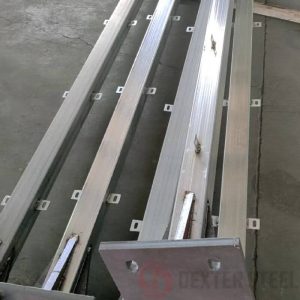
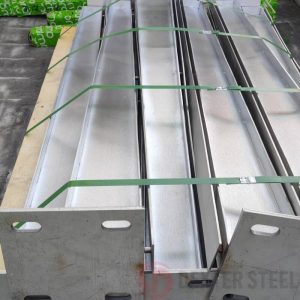
Yes. Fabrication processes such as drilling, welding connection plates, and cutting to precise lengths are commonly used to prepare box section columns for structural assembly.
How are box section columns typically manufactured?
Most box sections are produced through cold forming or hot forming processes followed by welding along a longitudinal seam. The resulting hollow section provides consistent strength and dimensional accuracy.
Can box section columns be used in outdoor structures?
Yes. For outdoor applications, box section columns are often protected with galvanizing, painting, or other corrosion-resistant coatings to ensure long-term durability.
Box sections provide excellent torsional rigidity due to their closed cross-section. This structural efficiency allows them to resist twisting forces better than many open profiles, making them useful in structures where lateral stability is important.
Yes. The smooth surfaces and symmetrical geometry of square and rectangular hollow sections make them ideal for exposed structural elements in modern architecture.
Yes. Fabrication processes such as drilling, welding connection plates, and cutting to precise lengths are commonly used to prepare box section columns for structural assembly.
Most box sections are produced through cold forming or hot forming processes followed by welding along a longitudinal seam. The resulting hollow section provides consistent strength and dimensional accuracy.
Yes. For outdoor applications, box section columns are often protected with galvanizing, painting, or other corrosion-resistant coatings to ensure long-term durability.
Related Glossaries
A structural steel profile with a hollow cross-section, typically square, rectangular, or circular. HSS columns provide excellent strength-to-weight efficiency and are widely used in architectural and structural applications.
A structural connection method where a steel plate is welded to the end of a column to allow bolted attachment to beams or foundations.
A structural steel profile with a hollow cross-section, typically square, rectangular, or circular. HSS columns provide excellent strength-to-weight efficiency and are widely used in architectural and structural applications.
A structural connection method where a steel plate is welded to the end of a column to allow bolted attachment to beams or foundations.