Frequently Asked Questions
Structural steel fabricators frequently ask technical questions about carbon steel beams before procurement. These questions usually focus on grade selection, weldability, dimensional tolerance, and delivery condition. The following topics reflect the most common concerns encountered in real fabrication and construction projects.
What grades are most commonly used for carbon steel beams in structural construction?
The most widely specified grades are ASTM A36 and ASTM A992 in North America, while S235 and S355 are common in European standards. A992 is often preferred for wide flange beams because it offers controlled chemistry and better strength consistency for structural design.
Can carbon steel beams be easily welded during fabrication?
Yes. Carbon steel beams are generally highly weldable due to their moderate carbon content. Standard welding processes such as SMAW, FCAW, and GMAW are commonly used without requiring complex preheating procedures, provided the beam thickness and grade are within typical structural ranges.
How accurate are the dimensional tolerances for rolled steel beams?
Rolled structural beams follow industry standards such as ASTM A6 or EN 10034 for dimensional tolerance. These standards control parameters including straightness, flange width, web thickness, and camber to ensure the beam fits properly during fabrication and erection.
Can beams be supplied cut to length for fabrication shops?
Yes. Many structural steel buyers request saw cutting or flame cutting before shipment. Supplying beams at precise project lengths reduces handling and improves fabrication efficiency, especially for repetitive structural components.
How should carbon steel beams be stored before fabrication?
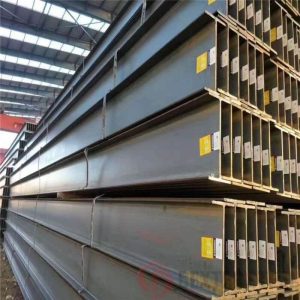
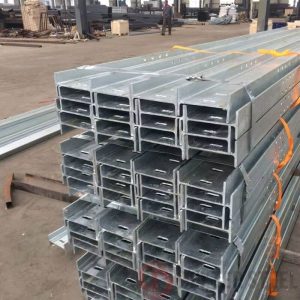
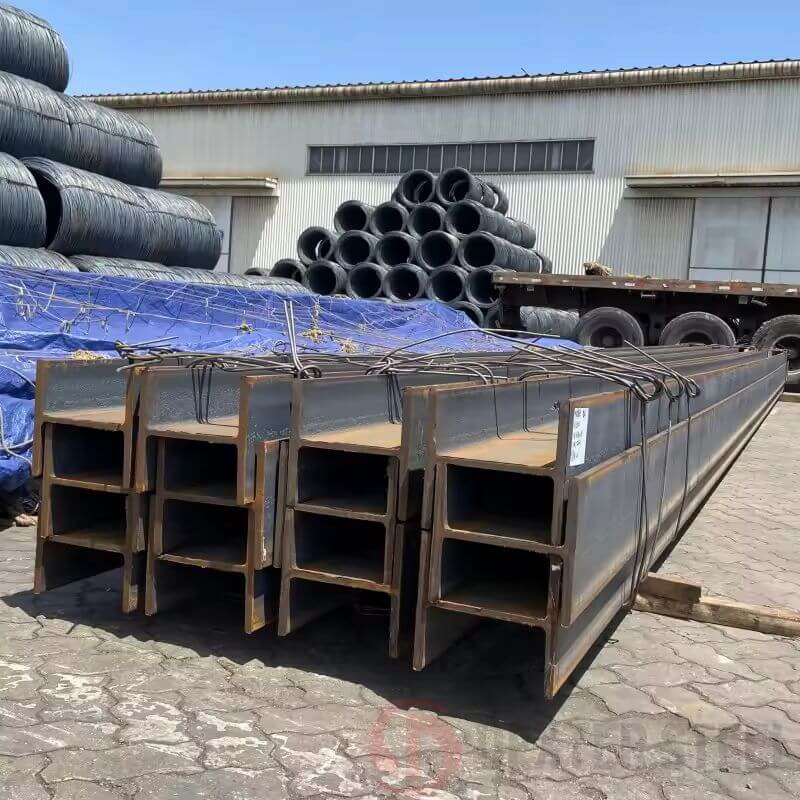
Beams should be stored on elevated supports to prevent direct contact with soil or standing water. Proper stacking and spacing also help avoid deformation or surface corrosion during storage prior to fabrication.
The most widely specified grades are ASTM A36 and ASTM A992 in North America, while S235 and S355 are common in European standards. A992 is often preferred for wide flange beams because it offers controlled chemistry and better strength consistency for structural design.
Yes. Carbon steel beams are generally highly weldable due to their moderate carbon content. Standard welding processes such as SMAW, FCAW, and GMAW are commonly used without requiring complex preheating procedures, provided the beam thickness and grade are within typical structural ranges.
Rolled structural beams follow industry standards such as ASTM A6 or EN 10034 for dimensional tolerance. These standards control parameters including straightness, flange width, web thickness, and camber to ensure the beam fits properly during fabrication and erection.
Yes. Many structural steel buyers request saw cutting or flame cutting before shipment. Supplying beams at precise project lengths reduces handling and improves fabrication efficiency, especially for repetitive structural components.
Beams should be stored on elevated supports to prevent direct contact with soil or standing water. Proper stacking and spacing also help avoid deformation or surface corrosion during storage prior to fabrication.