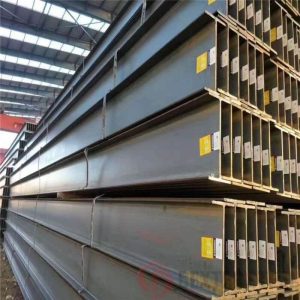
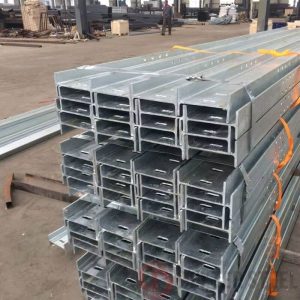
Carbon steel columns are valued for their high compressive strength and structural reliability. Their material properties allow them to carry substantial vertical loads while maintaining predictable performance in structural frames.
Another important characteristic is fabrication compatibility. Carbon steel columns can be easily cut, welded, drilled, or fitted with connection plates, making them practical for large structural fabrication projects.
Cost efficiency is also a major advantage. Compared with specialized materials such as stainless steel, carbon steel provides strong structural performance at a much lower material cost.
However, carbon steel columns require corrosion protection in outdoor environments, as the material can rust when exposed to moisture and atmospheric conditions.
| Comparison Dimension | Carbon Steel Column | Stainless Steel Column | Galvanized Steel Column |
|---|---|---|---|
| Primary Advantage | High strength and cost efficiency | Superior corrosion resistance and aesthetic finish | Long-term corrosion protection through zinc coating |
| Typical Applications | Building frames, warehouses, parking structures | Architectural structures, exposed interior columns | Outdoor infrastructure, lighting structures, solar supports |
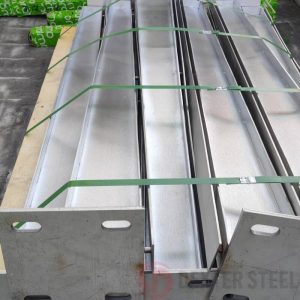
| Corrosion Resistance | Requires protective coating outdoors | Naturally corrosion resistant | Zinc coating protects steel from corrosion |
Value Added Sevices
Building contractors and fabricators purchasing carbon steel columns often appreciate receiving them with end preparation completed. This reduces on-site labor and ensures precise load transfer, which is critical for vertical supports in structures like parking garages and distribution centers.
Frequently Asked Questions
Buyers of carbon steel columns are typically structural fabricators and contractors responsible for assembling building frames. Their questions usually focus on load capacity, fabrication requirements, and dimensional accuracy. These topics reflect the practical considerations involved in preparing columns for reliable structural performance during installation.
What grades of carbon steel are commonly used for structural columns?
Common grades include ASTM A36 and ASTM A572 in North America, as well as S235 and S355 in European standards. These materials provide reliable strength and weldability suitable for most structural column applications.
How is column straightness controlled during production?
Structural steel standards define allowable tolerances for straightness and dimensional accuracy. During manufacturing and fabrication, columns are inspected to ensure they meet these tolerances so that loads transfer correctly through the structural frame.
Can carbon steel columns be supplied with base plates already welded?
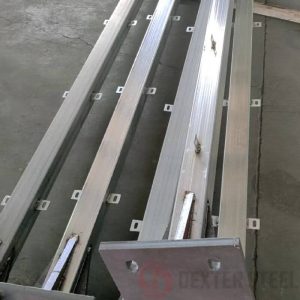
Yes. Many fabricators request columns with base plates pre-welded to reduce installation time on site. This preparation ensures accurate alignment with anchor bolts and simplifies foundation connections.
How are column lengths determined for construction projects?
Column length is specified according to the building design drawings and structural calculations. Fabricators often request precise cut-to-length columns to match floor heights and connection details within the structure.
Do carbon steel columns require corrosion protection?
For interior structural frames, coatings may not always be required. However, columns exposed to outdoor environments are typically protected with paint systems, galvanizing, or other coatings to prevent corrosion.
Common grades include ASTM A36 and ASTM A572 in North America, as well as S235 and S355 in European standards. These materials provide reliable strength and weldability suitable for most structural column applications.
Structural steel standards define allowable tolerances for straightness and dimensional accuracy. During manufacturing and fabrication, columns are inspected to ensure they meet these tolerances so that loads transfer correctly through the structural frame.
Yes. Many fabricators request columns with base plates pre-welded to reduce installation time on site. This preparation ensures accurate alignment with anchor bolts and simplifies foundation connections.
Column length is specified according to the building design drawings and structural calculations. Fabricators often request precise cut-to-length columns to match floor heights and connection details within the structure.
For interior structural frames, coatings may not always be required. However, columns exposed to outdoor environments are typically protected with paint systems, galvanizing, or other coatings to prevent corrosion.