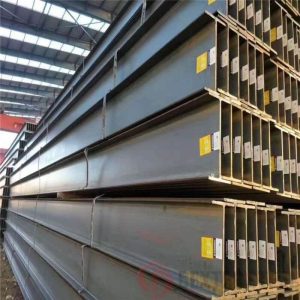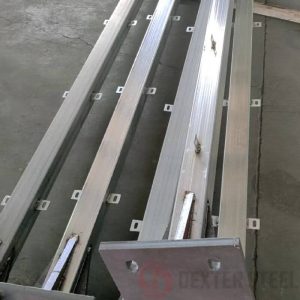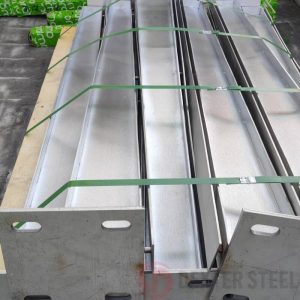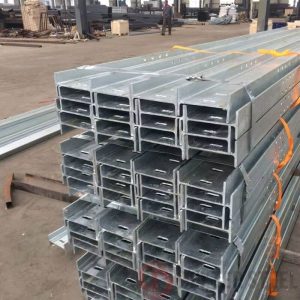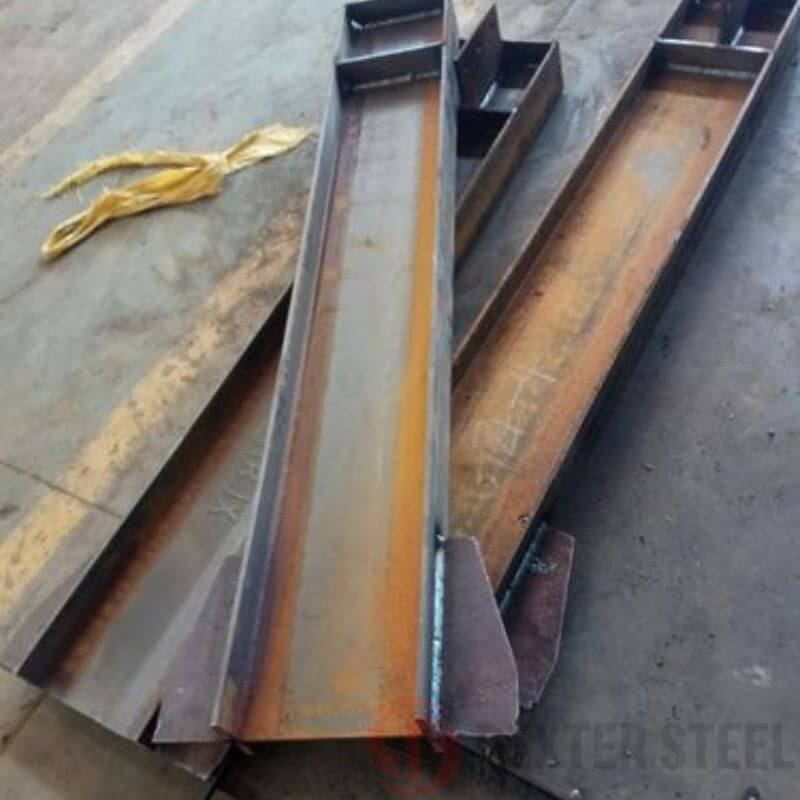
Welded steel beams provide exceptional design flexibility. Because they are fabricated from steel plates rather than rolled directly from mills, their dimensions can be adjusted to meet precise engineering requirements.
Another advantage is optimized material distribution. Engineers can vary the web depth and flange thickness to place steel where it contributes most to structural strength, improving efficiency in heavy load applications.
Welded beams are also commonly used for long-span structures. Their custom dimensions allow designers to achieve structural capacities that standard rolled beams cannot provide.
However, welded beams require controlled fabrication processes and careful quality inspection to ensure weld integrity and dimensional accuracy.
| Comparison Dimension | Welded Steel Beam | Built-Up Steel Beam | Cross Section Steel Column |
|---|---|---|---|
| Manufacturing Method | Plates welded to create beam section | Multiple plates or sections assembled into complex profiles | Structural column formed with cross-shaped profile |
| Typical Applications | Long-span beams, bridges, heavy industrial structures | Stadiums, airports, architecturally complex structures | Structures where multiple beams connect to one column |
| Structural Role | Primarily used as beams | Used for specialized beams and structural members | Primarily used as vertical columns |
Value Added Sevices
Engineers and construction managers require welded beams for projects with non-standard spans or heavy loads that cannot be met by standard rolled sections. These beams are fabricated from plate steel and require specialized in-house capabilities to meet exact design calculations.
Frequently Asked Questions
Engineers and fabrication managers often evaluate welded steel beams when project requirements exceed the limits of standard rolled sections. Their questions typically focus on structural performance, fabrication quality, and inspection standards. These topics reflect the practical concerns encountered when specifying custom structural members.
When are welded steel beams used instead of rolled beams?
Welded beams are used when required beam depth, flange width, or load capacity cannot be achieved using standard rolled sections. They are commonly specified for long-span structures, heavy industrial equipment supports, and bridge construction.
Are welded beams as strong as rolled steel beams?
Yes. When fabricated correctly using qualified welding procedures and proper inspection methods, welded beams can achieve structural performance equal to or greater than rolled sections. Their design flexibility often allows engineers to optimize strength where it is most needed.
What types of welding processes are used to manufacture these beams?
Common processes include submerged arc welding and flux-cored arc welding, which provide deep penetration and consistent weld quality. These processes are widely used in structural steel fabrication.
How is the quality of welded beams verified?
Fabricators typically conduct visual inspection, dimensional verification, and sometimes non-destructive testing such as ultrasonic testing to ensure weld integrity and structural reliability.
Can welded beams be fabricated in non-standard shapes?
Yes. Welded beams can be designed with customized dimensions or specialized profiles to meet specific structural requirements, making them suitable for projects where architectural or engineering constraints require unique beam geometries.
Welded beams are used when required beam depth, flange width, or load capacity cannot be achieved using standard rolled sections. They are commonly specified for long-span structures, heavy industrial equipment supports, and bridge construction.
Yes. When fabricated correctly using qualified welding procedures and proper inspection methods, welded beams can achieve structural performance equal to or greater than rolled sections. Their design flexibility often allows engineers to optimize strength where it is most needed.
Common processes include submerged arc welding and flux-cored arc welding, which provide deep penetration and consistent weld quality. These processes are widely used in structural steel fabrication.
Fabricators typically conduct visual inspection, dimensional verification, and sometimes non-destructive testing such as ultrasonic testing to ensure weld integrity and structural reliability.
Yes. Welded beams can be designed with customized dimensions or specialized profiles to meet specific structural requirements, making them suitable for projects where architectural or engineering constraints require unique beam geometries.