Frequently Asked Questions
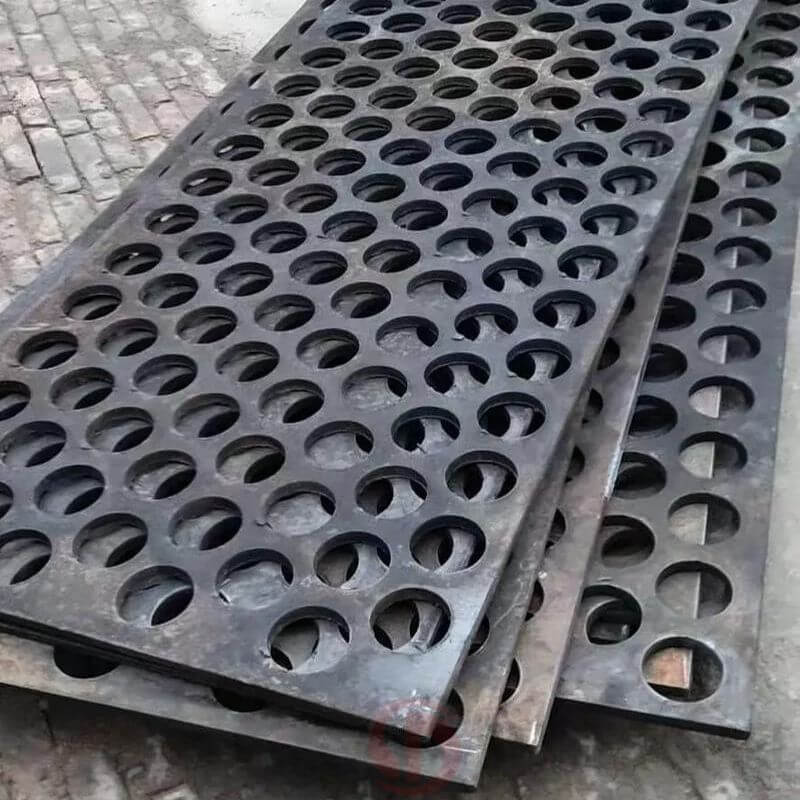
Perforated steel plate buyers typically focus on hole precision, open area ratio, and plate flatness after perforation. Manufacturers of filtration systems, ventilation equipment, and architectural panels need to ensure that the hole pattern meets both functional and structural requirements.
What is the main function of perforated steel plates in industrial applications?
Perforated steel plates allow controlled passage of air, light, sound, or liquids through the material while still maintaining structural strength. This makes them useful for filtration, ventilation, screening, and architectural applications.
How is perforated steel plate manufactured?
Perforated steel plates are typically produced using punching or stamping machines that create repeating hole patterns across the plate surface. The pattern, hole diameter, and spacing can be customized according to application requirements.
What does open area ratio mean in perforated plates?
Open area ratio refers to the percentage of the plate surface occupied by holes compared with the total surface area. Higher open area ratios allow greater airflow or fluid passage but may reduce structural strength.
Can perforated steel plates maintain flatness after punching?
Yes, but the punching process can introduce internal stresses that affect flatness. Proper processing techniques such as leveling or flattening are often used after perforation to ensure dimensional stability.
What industries commonly use perforated steel plates?
Perforated plates are widely used in filtration equipment, ventilation systems, acoustic panels, architectural façades, industrial guards, and agricultural processing machinery.
Perforated steel plates allow controlled passage of air, light, sound, or liquids through the material while still maintaining structural strength. This makes them useful for filtration, ventilation, screening, and architectural applications.
Perforated steel plates are typically produced using punching or stamping machines that create repeating hole patterns across the plate surface. The pattern, hole diameter, and spacing can be customized according to application requirements.
Open area ratio refers to the percentage of the plate surface occupied by holes compared with the total surface area. Higher open area ratios allow greater airflow or fluid passage but may reduce structural strength.
Yes, but the punching process can introduce internal stresses that affect flatness. Proper processing techniques such as leveling or flattening are often used after perforation to ensure dimensional stability.
Perforated plates are widely used in filtration equipment, ventilation systems, acoustic panels, architectural façades, industrial guards, and agricultural processing machinery.
Related Glossaries
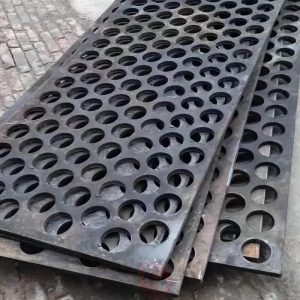
Perforation pattern describes the arrangement of holes across the steel plate surface. Common patterns include staggered rows, straight rows, and decorative arrangements depending on functional or visual requirements.
Plate leveling is a process used after perforation to correct distortion caused by punching forces. Leveling ensures the plate remains flat for installation or further fabrication.
A screening plate is a perforated steel plate used to separate particles based on size in industrial or agricultural processing equipment.
Perforation pattern describes the arrangement of holes across the steel plate surface. Common patterns include staggered rows, straight rows, and decorative arrangements depending on functional or visual requirements.
Plate leveling is a process used after perforation to correct distortion caused by punching forces. Leveling ensures the plate remains flat for installation or further fabrication.
A screening plate is a perforated steel plate used to separate particles based on size in industrial or agricultural processing equipment.
Industries Served
Pre-punched holes; used for separation, ventilation, and aesthetics.
Filtration & Separation:
- Industrial vibrating screeners
- Oil and fuel filters
Architectural & Design:
- Sunscreens and building shading devices
- Ceiling panels
- Privacy screens and partitions
Industrial Machinery & Protection:
- Machine tool guards and safety enclosure
- Ventilation grilles and air intake covers