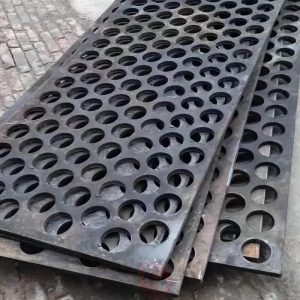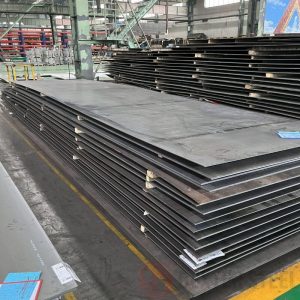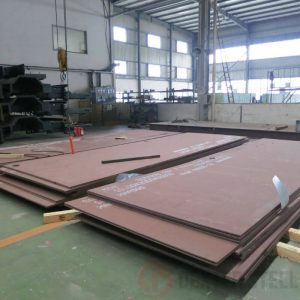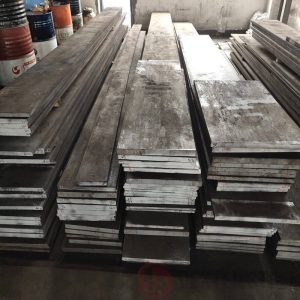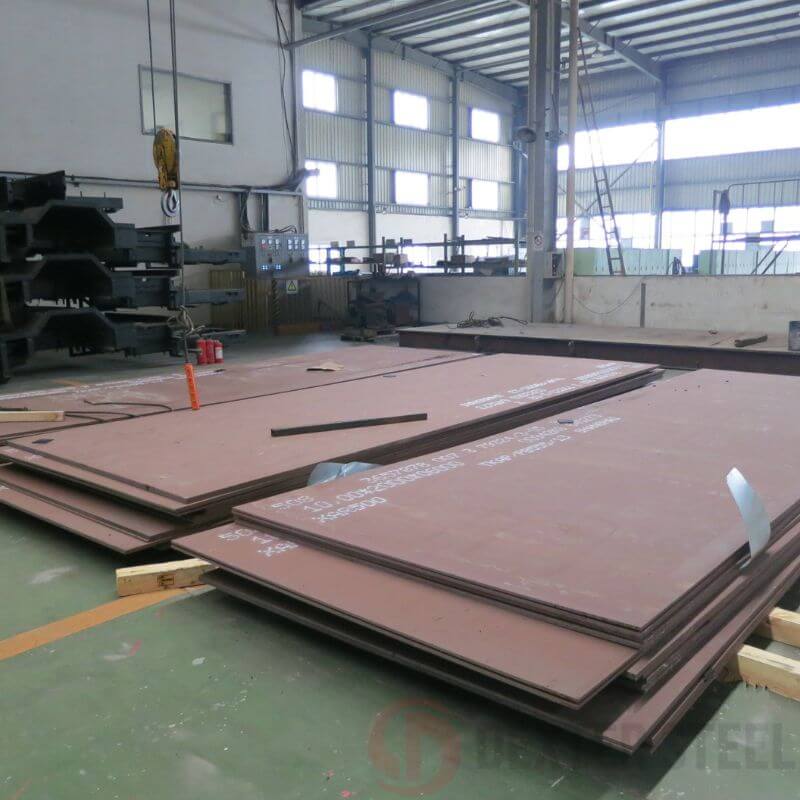
Wear resistant steel plate is designed primarily to resist surface wear caused by abrasive materials. The high hardness of these plates significantly slows down material loss in environments where conventional steels would wear quickly.
Another important feature is service life improvement. Equipment components made from wear resistant steel can often operate much longer before replacement, reducing maintenance downtime and operating costs in mining and material handling industries.
These steels are typically produced through alloying and heat treatment processes that provide controlled hardness while maintaining adequate toughness to resist cracking during impact.
Despite their high hardness, wear resistant plates can still be cut and welded using appropriate fabrication procedures, allowing equipment manufacturers to integrate them into complex industrial machinery designs.
| Comparison Dimension | Wear Resistant Steel Plate | Shipbuilding Steel Plate | High Strength Steel Plate | Quenched & Tempered Steel Plate (Q&T) |
|---|---|---|---|---|
| Primary design purpose | Resistance to abrasive wear | Marine structural performance | High load-bearing strength | High strength with balanced toughness |
| Typical hardness level | Very high hardness (commonly 400–500 HB) | Moderate hardness for weldability | Moderate to high strength levels | High strength through heat treatment |
| Main service environment | Mining, cement, quarry equipment | Marine structures and ship hulls | Transportation and heavy structures | Heavy equipment and load-bearing machinery |
| Typical applications | Bucket liners, crushers, dump trucks, chutes | Ship hull structures, offshore platforms | Truck frames, cranes, equipment structures | Cranes, excavators, heavy machinery |
Frequently Asked Questions
Wear resistant steel plate buyers typically focus on hardness levels, abrasion resistance, and fabrication considerations. Equipment manufacturers in mining and material handling industries must ensure that the steel provides long service life while remaining suitable for cutting and welding during equipment production.
What gives wear resistant steel plates their abrasion resistance?
Wear resistant steels achieve high hardness through controlled alloy composition and heat treatment processes. This hardness helps the material resist surface wear when exposed to abrasive particles and friction.
How is hardness measured for wear resistant steel plates?
Hardness is usually measured using the Brinell hardness scale (HBW). Common wear plate grades are classified according to hardness levels such as 400 HB, 450 HB, or 500 HB depending on the required abrasion resistance.
Can wear resistant steel plates be welded during equipment fabrication?
Yes, but welding requires proper procedures because high hardness steels are more sensitive to cracking. Preheating and controlled welding parameters are often used to maintain structural integrity.
Where are wear resistant steel plates typically used?
These plates are widely used in mining equipment, crushers, dump truck bodies, conveyor systems, bucket liners, and other equipment exposed to abrasive materials.
Does higher hardness always mean better performance?
Higher hardness generally improves abrasion resistance, but excessive hardness can reduce toughness. Engineers often select a hardness level that balances wear resistance with sufficient impact toughness for the application.
Wear resistant steels achieve high hardness through controlled alloy composition and heat treatment processes. This hardness helps the material resist surface wear when exposed to abrasive particles and friction.
Hardness is usually measured using the Brinell hardness scale (HBW). Common wear plate grades are classified according to hardness levels such as 400 HB, 450 HB, or 500 HB depending on the required abrasion resistance.
Yes, but welding requires proper procedures because high hardness steels are more sensitive to cracking. Preheating and controlled welding parameters are often used to maintain structural integrity.
These plates are widely used in mining equipment, crushers, dump truck bodies, conveyor systems, bucket liners, and other equipment exposed to abrasive materials.
Higher hardness generally improves abrasion resistance, but excessive hardness can reduce toughness. Engineers often select a hardness level that balances wear resistance with sufficient impact toughness for the application.
Material Grades
AR400 (ASTM)
400 HB abrasion-resistant carbon steel, good formability for moderate wear uses.
Hardox® 500 (SSAB)
High-hardness tough steel, extends life in severe impact and wear scenarios.
JFE-EH 400 (JFE)
400 HB Japanese wear plate, for mining and construction wear parts.
AR500 (ASTM)
500 HB wear-resistant steel, long service life for mining screens and buckets.