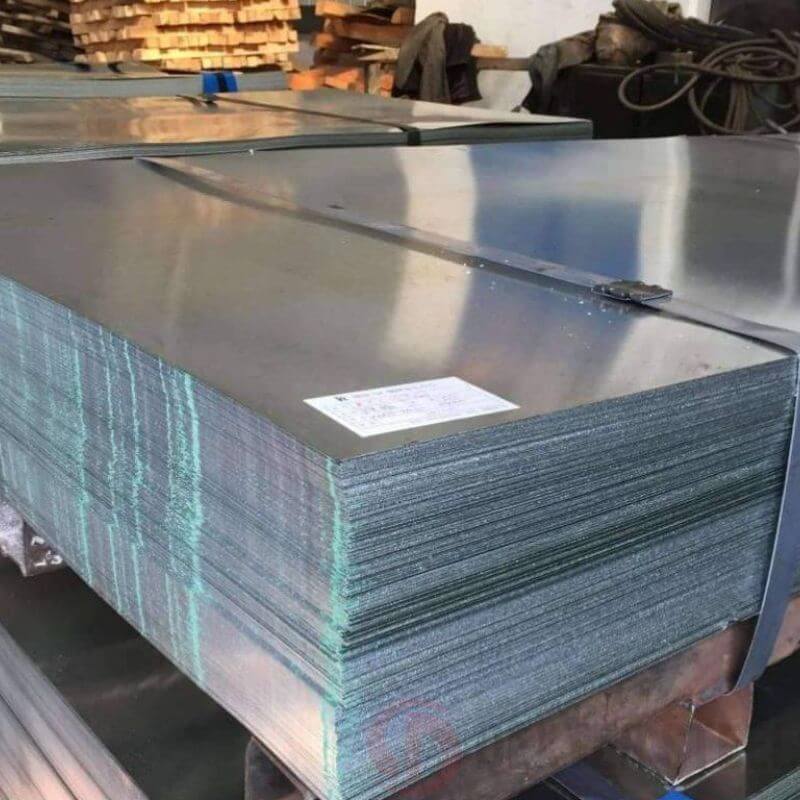
Material Grades
ASTM A387 Gr11 Cl2
Chrome-moly plate for refinery and power plant high-temperature service.
ASTM A240 Type 310S
High Cr-Ni stainless steel with good oxidation resistance up to 2000°F.
1.4878 (EN 10088-2)
Heat-resistant austenitic steel for exhaust and heat treatment equipment.
SUH310 (JIS G4312)
Japanese heat-resistant steel equivalent to 310S for high-temp furnace parts.
Frequently Asked Questions
Heat resistant steel plate buyers typically focus on high-temperature performance, oxidation resistance, and mechanical stability. Equipment manufacturers in the energy and petrochemical sectors must ensure that the steel can withstand prolonged exposure to elevated temperatures without structural failure.
What makes heat resistant steel plates suitable for high-temperature environments?
Heat resistant steels contain alloying elements such as chromium and molybdenum that improve oxidation resistance and help the steel retain strength when exposed to high temperatures.
What is oxidation resistance in high-temperature steel applications?
Oxidation resistance refers to the ability of steel to resist surface scaling and material degradation when exposed to high-temperature oxygen-rich environments such as furnaces or combustion systems.
How do heat resistant steels differ from pressure vessel steels?
Heat resistant steels are designed primarily for elevated temperature service and oxidation resistance, while pressure vessel steels focus more on strength and toughness under internal pressure conditions.
Can heat resistant steel plates be welded during fabrication?
Yes. Many heat resistant steels have good weldability, although welding procedures must be controlled to maintain the desired microstructure and high-temperature performance.
What industries commonly use heat resistant steel plates?
These plates are widely used in furnaces, boilers, petrochemical processing units, heat treatment equipment, and other industrial systems operating at elevated temperatures.
Heat resistant steels contain alloying elements such as chromium and molybdenum that improve oxidation resistance and help the steel retain strength when exposed to high temperatures.
Oxidation resistance refers to the ability of steel to resist surface scaling and material degradation when exposed to high-temperature oxygen-rich environments such as furnaces or combustion systems.
Heat resistant steels are designed primarily for elevated temperature service and oxidation resistance, while pressure vessel steels focus more on strength and toughness under internal pressure conditions.
Yes. Many heat resistant steels have good weldability, although welding procedures must be controlled to maintain the desired microstructure and high-temperature performance.
These plates are widely used in furnaces, boilers, petrochemical processing units, heat treatment equipment, and other industrial systems operating at elevated temperatures.