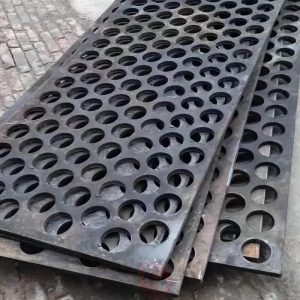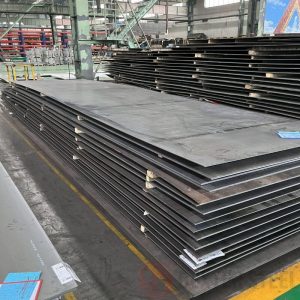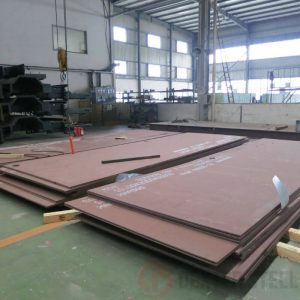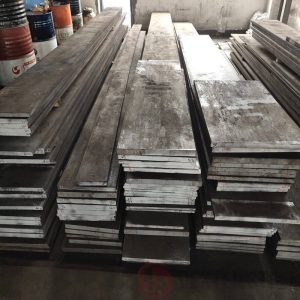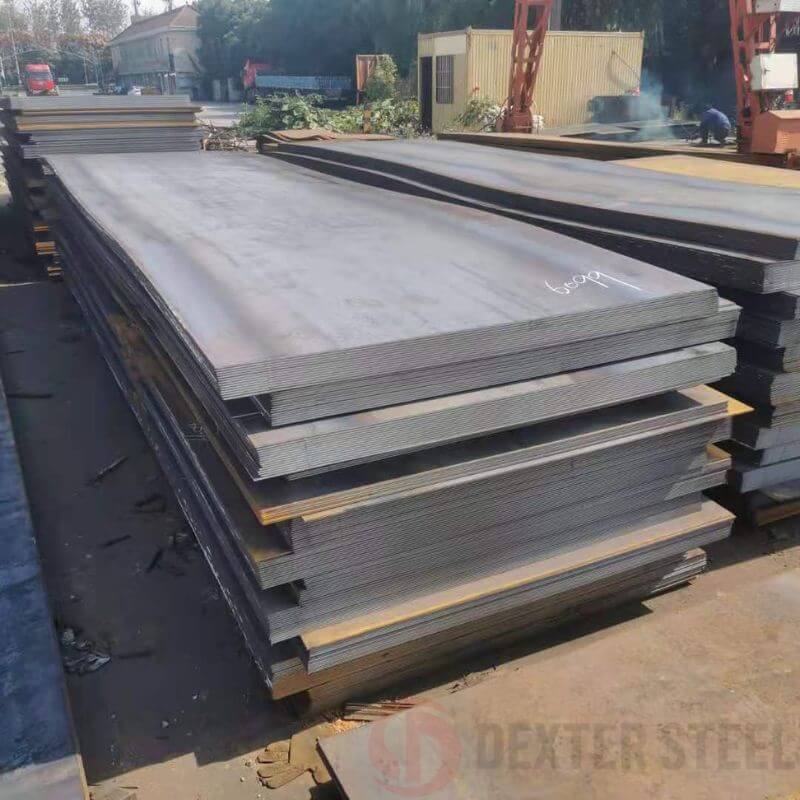
Hot rolled steel plate is produced through a high-temperature rolling process that allows thick steel sections to be formed efficiently. This manufacturing method makes it one of the most economical solutions for structural steel applications requiring larger plate thickness.
The material typically has a characteristic mill scale surface produced during high-temperature rolling. While this surface condition is acceptable for structural use, it may require cleaning if painting or coating is planned.
Another advantage of hot rolled plates is the wide thickness range available. These plates can be produced in significantly thicker dimensions than most cold rolled products, supporting heavy structural and equipment applications.
Hot rolled steel plate also provides good weldability and fabrication flexibility, making it suitable for cutting, bending, and welding operations commonly used in heavy manufacturing.
| Comparison Dimension | Hot Rolled Steel Plate | Pickled & Oiled Steel Plate (HRPO) | Cold Rolled Steel Plate |
|---|---|---|---|
| Production process | Rolled at high temperature during primary steel processing | Hot rolled steel that undergoes pickling and oiling treatment | Further processed at room temperature after hot rolling |
| Surface condition | Mill scale present on surface | Scale removed through pickling, light oil applied for protection | Smooth and clean surface finish |
| Typical applications | Structural fabrication, heavy equipment, machinery bases | Automotive parts, fabrication requiring clean surfaces | Precision parts, forming components, coated products |
Value Added Sevices
Hot rolled steel plate provides economical material for heavy fabrication applications. Its scaled surface and relaxed tolerances suit structural workshops and equipment manufacturers focused on cost-effective production of large components where surface appearance is secondary.
Frequently Asked Questions
Hot rolled steel plate buyers usually focus on surface condition, thickness tolerance, and suitability for fabrication processes. Fabrication workshops and equipment manufacturers need to understand how the rolling process affects dimensional accuracy, welding performance, and downstream processing.
What defines hot rolled steel plate in the manufacturing process?
Hot rolled steel plate is produced by rolling steel slabs at high temperatures where the metal becomes more workable. This allows large plates to be produced efficiently while achieving the required thickness and structural properties.
Why does hot rolled steel plate often have mill scale on the surface?
Mill scale forms when steel reacts with oxygen at high temperature during the rolling process. It appears as a dark oxide layer on the surface and is commonly present on hot rolled steel plates unless removed by pickling or surface treatment.
Is hot rolled steel plate suitable for welding and fabrication?
Yes. Hot rolled steel plates generally have good weldability and are widely used in structural fabrication, machinery frames, and welded assemblies where surface appearance is not the primary concern.
How does hot rolled steel plate differ from cold rolled steel plate?
Hot rolled steel plate typically has a rougher surface finish and wider dimensional tolerance compared with cold rolled material. Cold rolled steel is processed further at room temperature to achieve smoother surfaces and tighter thickness control.
When should hot rolled steel plate be selected instead of other steel plate types?
Hot rolled steel plate is usually selected when structural strength and cost efficiency are more important than surface precision. It is particularly suitable for thick plates used in construction structures, heavy equipment, and industrial fabrication.
Hot rolled steel plate is produced by rolling steel slabs at high temperatures where the metal becomes more workable. This allows large plates to be produced efficiently while achieving the required thickness and structural properties.
Mill scale forms when steel reacts with oxygen at high temperature during the rolling process. It appears as a dark oxide layer on the surface and is commonly present on hot rolled steel plates unless removed by pickling or surface treatment.
Yes. Hot rolled steel plates generally have good weldability and are widely used in structural fabrication, machinery frames, and welded assemblies where surface appearance is not the primary concern.
Hot rolled steel plate typically has a rougher surface finish and wider dimensional tolerance compared with cold rolled material. Cold rolled steel is processed further at room temperature to achieve smoother surfaces and tighter thickness control.
Hot rolled steel plate is usually selected when structural strength and cost efficiency are more important than surface precision. It is particularly suitable for thick plates used in construction structures, heavy equipment, and industrial fabrication.
Related Glossaries
Plate rolling refers to the industrial process where heated steel slabs are passed through large rolling mills to reduce thickness and form wide steel plates. This process determines the final plate thickness and contributes to the material’s mechanical properties.
Structural fabrication refers to the manufacturing process where steel plates are cut, welded, and assembled into structures such as bridges, equipment frames, and building components. Hot rolled steel plates are widely used in this type of industrial production.
Mill scale is the oxide layer that forms on the surface of steel during hot rolling at high temperatures. It appears as a dark bluish or black surface and is commonly removed by pickling or blasting when surface preparation is required for coating or painting.
Plate rolling refers to the industrial process where heated steel slabs are passed through large rolling mills to reduce thickness and form wide steel plates. This process determines the final plate thickness and contributes to the material’s mechanical properties.
Structural fabrication refers to the manufacturing process where steel plates are cut, welded, and assembled into structures such as bridges, equipment frames, and building components. Hot rolled steel plates are widely used in this type of industrial production.
Mill scale is the oxide layer that forms on the surface of steel during hot rolling at high temperatures. It appears as a dark bluish or black surface and is commonly removed by pickling or blasting when surface preparation is required for coating or painting.