Value Added Sevices
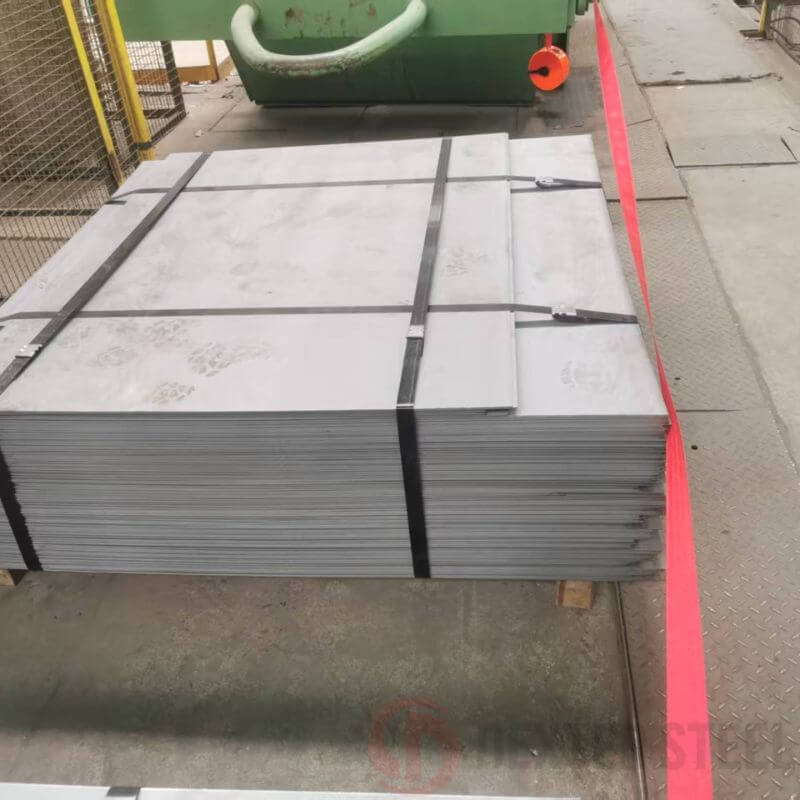
Pickled and oiled steel plate combines hot rolled economy with a clean, scale-free surface. Automotive and machinery manufacturers choose this material when surface quality matters for welding, forming, and painting preparation without the cost of cold rolled products.
Frequently Asked Questions
Buyers of pickled and oiled steel plates typically focus on surface cleanliness, weldability, and suitability for downstream coating or forming operations. Automotive component manufacturers and machinery producers rely on HRPO materials to simplify production processes that require clean steel surfaces.
What is the main purpose of the pickling process in HRPO steel plate?
The pickling process removes the mill scale that forms on hot rolled steel during high-temperature processing. This chemical cleaning step exposes a clean steel surface, which improves welding, forming, and coating preparation.
Why is oil applied after the pickling process?
A thin protective oil layer is applied to prevent rust from forming on the clean steel surface during storage and transportation. The oil is usually light and can be easily removed or burned off during welding or fabrication.
How does HRPO steel plate differ from standard hot rolled steel plate?
The main difference is surface condition. Hot rolled plates typically retain mill scale, while HRPO plates undergo pickling to remove the oxide layer, resulting in a cleaner and more uniform surface.
Is HRPO steel plate suitable for welding and painting applications?
Yes. The clean surface produced by pickling makes HRPO steel plates more suitable for welding and coating processes compared with untreated hot rolled steel, which may require additional surface preparation.
When should manufacturers choose HRPO steel plate instead of cold rolled steel?
HRPO steel plate is often selected when a clean surface is needed but the tighter tolerance and higher cost of cold rolled steel are unnecessary. It provides a practical balance between surface quality and cost efficiency.
The pickling process removes the mill scale that forms on hot rolled steel during high-temperature processing. This chemical cleaning step exposes a clean steel surface, which improves welding, forming, and coating preparation.
A thin protective oil layer is applied to prevent rust from forming on the clean steel surface during storage and transportation. The oil is usually light and can be easily removed or burned off during welding or fabrication.
The main difference is surface condition. Hot rolled plates typically retain mill scale, while HRPO plates undergo pickling to remove the oxide layer, resulting in a cleaner and more uniform surface.
Yes. The clean surface produced by pickling makes HRPO steel plates more suitable for welding and coating processes compared with untreated hot rolled steel, which may require additional surface preparation.
HRPO steel plate is often selected when a clean surface is needed but the tighter tolerance and higher cost of cold rolled steel are unnecessary. It provides a practical balance between surface quality and cost efficiency.
Related Glossaries
Pickling is a chemical surface treatment process where steel is immersed in acid solutions to remove mill scale, rust, and oxide layers. This process produces a clean metallic surface that improves weldability and coating preparation.
Mill scale removal refers to eliminating the oxide layer formed during hot rolling. Removing this layer improves surface quality and allows better adhesion for paint, coatings, or welding operations.
Surface descaling refers to the removal of oxide scale from steel surfaces using chemical, mechanical, or thermal methods. In HRPO steel, chemical pickling is the primary descaling method.
Pickling is a chemical surface treatment process where steel is immersed in acid solutions to remove mill scale, rust, and oxide layers. This process produces a clean metallic surface that improves weldability and coating preparation.
Mill scale removal refers to eliminating the oxide layer formed during hot rolling. Removing this layer improves surface quality and allows better adhesion for paint, coatings, or welding operations.
Surface descaling refers to the removal of oxide scale from steel surfaces using chemical, mechanical, or thermal methods. In HRPO steel, chemical pickling is the primary descaling method.