Characteristics
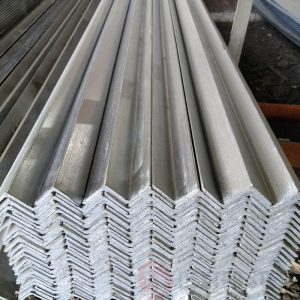
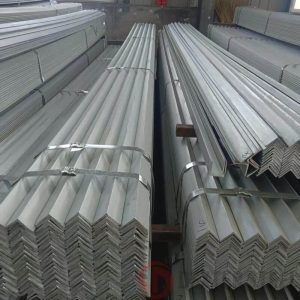
HSLA steel angle derives its properties from controlled rolling and micro-alloy additions, not increased carbon. This creates fine-grained microstructures offering high strength with retained toughness and weldability, ensuring predictable performance under dynamic loads.
Its key advantage is weight reduction. Designers can specify thinner sections without sacrificing capacity—critical in transportation where weight savings improve efficiency and compliance.
Despite higher strength, weldability remains good due to low carbon equivalents that minimize hardening. However, thicker sections may require temperature control.
For demanding applications, low-temperature impact toughness can be specified. HSLA grades meet Charpy test requirements, suiting cranes and excavators in cold environments where standard carbon steel’s toughness is unguaranteed.
Comparison Table
| Dimension | HSLA Steel Angle | Weathering Steel Angle | Shipbuilding Steel Angle |
|---|---|---|---|
| Primary Application Focus | Weight-efficient structures in transportation, heavy equipment, and general high-strength framing where material reduction is desired. | Unpainted outdoor structures such as bridges, transmission towers, and architectural features where atmospheric corrosion is the main concern. | Marine vessels and offshore structures requiring certified materials meeting classification society rules for hull and superstructure construction. |
| Toughness Characteristics | Good toughness, with options for improved low-temperature performance through controlled processing and chemistry. | Adequate toughness for most structural applications, but not typically optimized for sub-zero marine service. | Guaranteed Charpy impact properties at specified temperatures (typically 0°C or -20°C) as required by classification rules. |
Frequently Asked Questions
Engineers and specifiers frequently ask about the practical aspects of substituting HSLA for carbon steel, particularly regarding fabrication adjustments and how to verify that higher strength translates into real performance gains for their specific applications.
How does welding HSLA steel differ from welding mild steel?
HSLA steels require more attention to heat input and filler metal selection to prevent degradation of mechanical properties in the heat-affected zone. Using low-hydrogen processes and matching or undermatched filler metals appropriate for the strength level is recommended. Excessive heat input should be avoided to maintain the fine-grain structure that provides strength.
Can HSLA steel angle be bent or formed without cracking?
Yes, HSLA grades are formulated with controlled carbon and micro-alloy additions to retain formability. Minimum bend radii are generally larger than for mild steel, typically 1 to 1.5 times the thickness. Consulting the specific grade’s forming recommendations and bending with the grain orientation properly considered ensures successful results.
What is the actual weight savings possible by switching from A36 to HSLA Grade 50?
Theoretical weight savings can reach approximately 28% when designing for equivalent strength, as the allowable stress increases from 0.6Fy to 0.6Fy of the higher grade. Actual savings depend on section availability, stiffness requirements (which may govern design), and connection details. Many applications achieve 15-25% material weight reduction.
Are HSLA angles available with Charpy impact testing for low-temperature service?
Yes, many HSLA grades can be specified with supplemental Charpy V-Notch impact testing requirements. Grades such as ASTM A572 Grade 50 can be ordered with a specific test temperature and energy absorption value. For critical low-temperature applications, discussing requirements with the mill prior to ordering is essential.
HSLA steels require more attention to heat input and filler metal selection to prevent degradation of mechanical properties in the heat-affected zone. Using low-hydrogen processes and matching or undermatched filler metals appropriate for the strength level is recommended. Excessive heat input should be avoided to maintain the fine-grain structure that provides strength.
Yes, HSLA grades are formulated with controlled carbon and micro-alloy additions to retain formability. Minimum bend radii are generally larger than for mild steel, typically 1 to 1.5 times the thickness. Consulting the specific grade’s forming recommendations and bending with the grain orientation properly considered ensures successful results.
Theoretical weight savings can reach approximately 28% when designing for equivalent strength, as the allowable stress increases from 0.6Fy to 0.6Fy of the higher grade. Actual savings depend on section availability, stiffness requirements (which may govern design), and connection details. Many applications achieve 15-25% material weight reduction.
Yes, many HSLA grades can be specified with supplemental Charpy V-Notch impact testing requirements. Grades such as ASTM A572 Grade 50 can be ordered with a specific test temperature and energy absorption value. For critical low-temperature applications, discussing requirements with the mill prior to ordering is essential.
Material Grades
ASTM A572 Grade 50
the most common HSLA grade for angles, offering 50 ksi minimum yield strength with good weldability. Used in building frames, bridge girders, and equipment where higher strength reduces weight.
ASTM A709 Grade 50
the bridge construction specification that incorporates A572 requirements with additional toughness criteria. Used in highway bridges and other transportation structures with stringent fracture control plans.
EN 10025-4 S355ML
EN 10025-4 S355ML is a thermomechanically rolled grade with 355 MPa minimum yield and guaranteed low-temperature impact properties. Suitable for welded structures subject to dynamic loading in cold environments.
ASTM A656 Grade 50
ASTM A656 Grade 50 provides improved formability for applications requiring bending or cold forming. Often specified for components that combine high strength with tight radius bending requirements.
Value Added Sevices
Carbon structural steel angle serves as the backbone for buildings, bridges, and industrial plants. Processing these angles prior to delivery ensures faster on-site assembly, reduced labor costs, and compliance with structural specifications.