Value Added Sevices
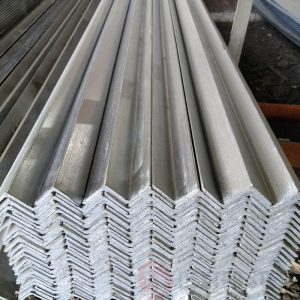
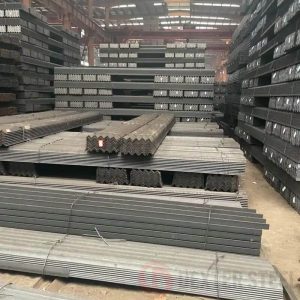
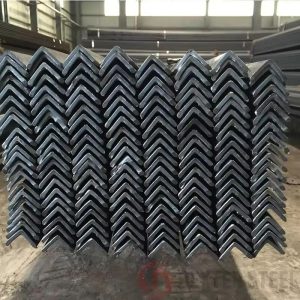
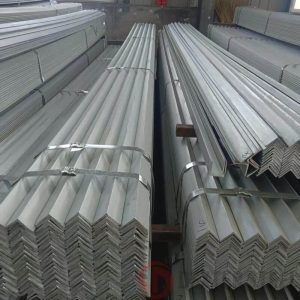
Carbon structural steel angle serves as the backbone for buildings, bridges, and industrial plants. Processing these angles prior to delivery ensures faster on-site assembly, reduced labor costs, and compliance with structural specifications.
Frequently Asked Questions
Shipyard buyers and marine engineers consistently ask about certification requirements, impact test temperature selection, and how material grades correspond to different structural locations within a vessel. These questions reflect the critical importance of compliance and traceability.
What is the difference between Grade A, AH32, and AH36 shipbuilding steel?
Grade A is the general-strength category (34 ksi yield) suitable for less highly stressed areas. AH32 and AH36 are higher-strength grades (47 ksi and 51 ksi yield respectively) that allow reduced plate thicknesses in primary hull structure. All grades have guaranteed impact properties, with the “H” designation indicating through-thickness toughness.
What impact test temperatures are typically required?
Requirements vary by grade and structural application. Ordinary-strength grades (A, B, D, E) have impact test requirements at different temperatures, with Grade E tested at -40°C. Higher-strength grades (AH, DH, EH) are typically tested at 0°C, -20°C, and -40°C respectively. Selection depends on design temperature and location within the vessel.
Can shipbuilding angles be welded with standard shipyard procedures?
Yes, these grades are specifically designed for weldability using shipyard processes. The controlled carbon equivalents and fine-grain practice ensure good weldability with preheat requirements determined by thickness, restraint, and ambient conditions per approved welding procedure specifications.
Grade A is the general-strength category (34 ksi yield) suitable for less highly stressed areas. AH32 and AH36 are higher-strength grades (47 ksi and 51 ksi yield respectively) that allow reduced plate thicknesses in primary hull structure. All grades have guaranteed impact properties, with the “H” designation indicating through-thickness toughness.
Requirements vary by grade and structural application. Ordinary-strength grades (A, B, D, E) have impact test requirements at different temperatures, with Grade E tested at -40°C. Higher-strength grades (AH, DH, EH) are typically tested at 0°C, -20°C, and -40°C respectively. Selection depends on design temperature and location within the vessel.
Yes, these grades are specifically designed for weldability using shipyard processes. The controlled carbon equivalents and fine-grain practice ensure good weldability with preheat requirements determined by thickness, restraint, and ambient conditions per approved welding procedure specifications.
Material Grades
AH32
AH32 has a 47 ksi minimum yield, impact tested at 0°C, and is used in primary hull structures to reduce weight and maintain strength.
AH36
AH36, with a 51 ksi yield and 0°C impact test, is used in high-stress areas like the bottom, deck, and framing of larger vessels.
DH36
DH36 matches AH36’s strength but is impact tested at -20°C, ideal for severe conditions or lower temperatures.
EH36
EH36, with impact testing at -40°C, is used in critical vessel structures in Arctic or extremely cold environments.