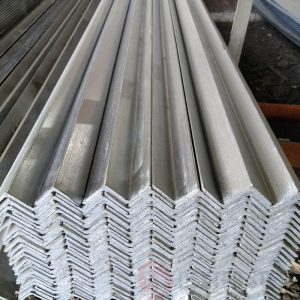
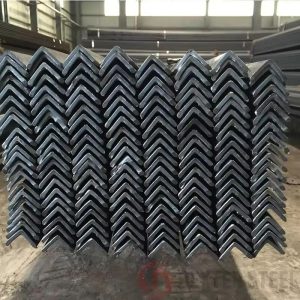
Hot-Rolled vs. Split-Beam Structural Tees
Hot-rolled tees offer smooth geometry and consistent thickness, while split-beam tees retain the mechanical properties of the parent I-beam. Dexter Steel provides both options depending on project requirements.
Surface Treatment Options
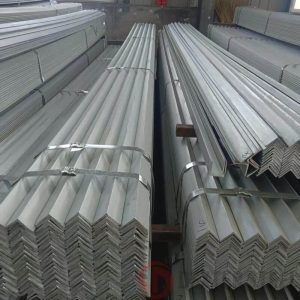
Structural Tees can be supplied black, primed, shot-blasted, galvanized, or coated according to project needs and environmental exposure.
Frequently Asked Questions
Structural Tees prompt frequent questions due to their unique geometry and load-bearing behavior. Engineers, fabricators, and contractors often ask about grade options, manufacturing methods, and suitability for load-critical structures. These FAQs address the most important technical points when choosing a T-Angle (Structural Tee).
How is a structural tee produced?
It can be hot-rolled or produced by splitting a wide-flange beam (I-beam) into two T-shaped profiles.
What advantages does a T-Angle offer?
High directional stiffness, strong flange support, and efficient load transfer for trusses, frames, and beam reinforcements.
What steel grades are available?
Q235B, Q355B, ASTM A36/A572, S275JR, S355JR, and marine grades for shipbuilding applications.
Can structural tees be welded and drilled easily?
Yes. They are made from weldable structural steels suitable for cutting, drilling, and fabrication.
Are galvanized T-angles available?
Yes. Hot-dip galvanization or painting can be applied for corrosion protection.
It can be hot-rolled or produced by splitting a wide-flange beam (I-beam) into two T-shaped profiles.
High directional stiffness, strong flange support, and efficient load transfer for trusses, frames, and beam reinforcements.
Q235B, Q355B, ASTM A36/A572, S275JR, S355JR, and marine grades for shipbuilding applications.
Yes. They are made from weldable structural steels suitable for cutting, drilling, and fabrication.
Yes. Hot-dip galvanization or painting can be applied for corrosion protection.
Industries Served
Construction
- Vertical mullion stiffeners for façade systems
- Structural tee window/door frame reinforcement ribs
- T-section floor deck reinforcement ribs
- Structural tee guardrail posts
Infrastructure
- T-beam flange stiffeners in bridge decks
- Under-bridge inspection platform tee supports
- T-section walkway support beams
- T-section guide rails for elevator shafts
Related Glossaries
This refers to the material’s “T” form, with a vertical stem and a flat top flange. The shape allows it to support loads from above while fitting neatly into narrow spaces. It’s commonly used when a full beam is not required.
The wide horizontal flange helps spread loads across a larger area. This makes it useful for supporting decking, panels, and structural surfaces. It also provides a stable mounting surface.
This refers to the material’s “T” form, with a vertical stem and a flat top flange. The shape allows it to support loads from above while fitting neatly into narrow spaces. It’s commonly used when a full beam is not required.
The wide horizontal flange helps spread loads across a larger area. This makes it useful for supporting decking, panels, and structural surfaces. It also provides a stable mounting surface.